

Annie Dillard, "who as a young American writer walked into the woods and came out with a Pulitzer Prize-winning book on the wonders and horrors of creation, the modern classic Pilgrim at Tinker Creek," died September 15, the New York Times reported. She was 81. The book, published in 1974, was an immediate success and won the Pulitzer for general nonfiction in 1975. Dillard also published essays, meditations on religion, poems, a theory of literature, two novels, journalism, and the bestselling autobiography An American Childhood (1987).
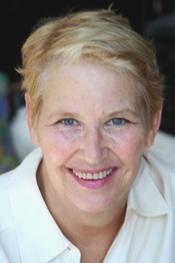 |
|
| Annie Dillard | |
Dillard's first book was the poetry collection Tickets for a Prayer Wheel, published a few months before Pilgrim at Tinker Creek. Later titles include Encounters with Chinese Writers (1984); The Writing Life (1989); For the Time Being (1999); and her second novel, The Maytrees (2007), which was the last book she wrote.
Many reviewers of Pilgrim at Tinker Creek mentioned it as a 20th-century analogue to Henry David Thoreau's Walden, which was not coincidental given that Dillard had chosen Thoreau as the subject of her master's thesis at Hollins University.
"Though her writing could convey the sense of a solitary life in the wilderness, she was mostly a day-tripper. After her forays into the Roanoke Valley of the Blue Ridge Mountains--which was, after all, her neighborhood--she would return home to the suburban house she shared with Richard Dillard, a creative writing instructor she had married at the end of her sophomore year at Hollins," the Times wrote, adding that "in spite of her patient, unflinching observations on flora and fauna, she wasn't a nature writer, but rather a theologian looking high and low for God."
In Pilgrim at Tinker Creek, Dillard wrote: "I walk out; I see something, some event that otherwise would have been utterly missed and lost; or something sees me, some enormous power brushes me with its clean wing, and I resound like a beaten bell."
She moved to Washington State, dividing her time between Bellingham and the islands Waldron and Lummi. Her marriage ended, and in the Pacific Northwest, she regained the concentration essential to her work.
"The Cascade Range, in these high latitudes, backs almost into the water," she wrote in Holy the Firm (1977). "There is only a narrow strip, an afterthought of foothills and farms sixty miles wide, between the snowy mountains and the sea.... If the Greeks had looked at Mt. Baker all day, their large and honest art would have broken, and they would have gone fishing, as these people do."
Dillard's years in Washington inspired some of the essays in her collection Teaching a Stone to Talk (1982). Her first novel, The Living (1992), a 19th-century pioneer saga centered on what became Whatcom County, was also inspired by her time there.
In addition, she taught classes at Western Washington State College (now Western Washington University). Paul Lindholdt, a former student working on a biography of Dillard, recalled: "She was by turns disorganized and inspiring, prickly and brilliant. She required her students to foot-stomp aloud the meter of favorite poems, including 'God's Grandeur' by Gerard Manley Hopkins."
Dillard returned east in 1979, and from then until 2001 she taught at Wesleyan University. After her second divorce in 1988, she married Robert D. Richardson Jr., whom she had met after sending him a fan letter about his book Henry Thoreau: A Life of the Mind. He died in 2020.
Dillard's papers are held at the Beinecke Library at Yale University. She was last photographed in public in 2014, when she received the National Humanities Medal from President Barack Obama for her "profound reflections on human life and nature."
She spent recent years at her Cape Cod home, painting watercolors, the Times noted, adding that Dillard "had written with all her might, and had tried to light the same fire in others."
In Holy the Firm, she wrote about a day in her classroom: "How many of you, I asked the people in my class, which of you want to give your lives and be writers? I was trembling from coffee, or cigarettes, or the closeness of faces all around me.... All hands rose to the question. (You, Nick? Will you? You, Margaret? Randy? Why do I want them to mean it?).... And then I tried to tell them what the choice must mean: You can't be anything else. You must go at your life with a broadax."