

|
|
|
Rachel Pastan |
|
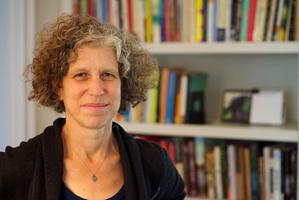
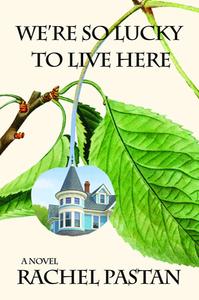
Rachel Pastan's novel In the Field, based on the life of Nobel Prize-winning geneticist Barbara McClintock, won the inaugural Science + Literature award from the National Book Foundation in 2022. She has also published three other novels: Alena, Lady of the Snakes, and This Side of Married. She is the literary director of Celia Bookshop in Swarthmore, Pa., and former chair of Swarthmore's housing affordability task force. Pastan's fifth novel is We're So Lucky to Live Here (Delphinium Books, September 15, 2026), an inquiry into grief, love, housing affordability, and the transformative power of art.
Handsell readers your book:
A young theater director returns to her childhood home after her mother's death. Found family, grief, art making, and a production of Anton Chekhov's The Cherry Orchard!
On your nightstand now:
I just finished Glyph by Ali Smith. It's an amazing short book about sisters, ghosts (real and imagined), and about the time we're living in. And no one writes sentences like she does. I'm right in the middle of Contrapposto by Dave Eggers, a complicated portrait of an artist at a time when the art world is just crazy (which is maybe always). And I'm keeping Diana Lind's compelling nonfiction book, Brave New Home: Our Future in Smarter, Simpler, Happier Housing, close at hand for inspiration and even comfort as I think about how we might--literally--reshape our world.
Favorite book when you were a child:
So hard to choose! I had a recording on LPs of E.B. White reading Charlotte's Web when I was a girl, and I listened to it so much that I learned it pretty much by heart. I can still recite the end inside my head and make myself cry--though as an adult I realize White was making a joke as well as being serious. I also loved books with magic in them, like A Wrinkle in Time by Madeleine L'Engle, Half Magic by Edward Eager, and of course C.S. Lewis's Narnia books.
Your top five authors:
Virginia Woolf, Jane Austen, Margaret Drabble, Toni Morrison. I'm resisting it, but still, the fifth is Alice Munro.
Book you've faked reading:
Maybe William Shakespeare's Hamlet. It took me forever to actually make it through that play. I still probably have not read every line.
Book you're an evangelist for:
The Fountain Overflows by Rebecca West. This half-forgotten book, a bestseller in 1957, is the story of an eccentric family on the outskirts of London: unstable genius father, former concert pianist mother, the question of what art is and how you know. Also a poltergeist and a murderess. When I started running a bookstore, my friend Alice said, "You'll sell a hundred copies of The Fountain Overflows." So far it's just a couple, but I'm trying!
 Book you've bought for the cover:
Yikes, I maybe have never done this. Is that weird? But I've avoided buying books I wanted to read when they had glossy movie tie-in covers.
Book you hid from your parents:
I can't remember the name of the fat, sexy public library book I checked out when my mother wasn't paying attention, but I do remember lurking in the adult section, leafing through pages in search of something juicy, and I remember the texture of the worn plastic library covering in my hand.
Book that changed your life:
The Great Gatsby by F. Scott Fitzgerald was the first book I read where I understood that every sentence of a novel could ravish the reader. His sentences in that book aren't necessarily fancy, or even showy (though some of them are), but they do something to my insides when I read them. I've always tried to write sentences that have that kind of beauty and power, though in a more understated way.
Favorite line from a book:
"Many years later, as he faced the firing squad, Colonel Aureliano Buendía was to remember that distant afternoon when his father took him to discover ice." This sentence, which I read for the first time when I was 17, brought reality and magic together for me. In a hot place like Macondo, ice was a kind of magic. The way Gabriel García Márquez muddles the boundaries between the real and the magical in that line is what I believe all books--even purely realistic ones--do.
Five books you'll never part with:
My mother's beautiful small edition of Pride and Prejudice by Jane Austen. The Book Borrower by Alice Mattison, one of the best novels about friendship, and the passionate ambivalence of motherhood, ever written. Cat's Eye by Margaret Atwood, whose early realistic novels I love even more than her great dystopian work. My falling-apart paperback of Leo Tolstoy's Anna Karenina, which was my favorite novel for a very long time. My grandmother's first edition of Elizabeth Bowen's stunning mid-20th-century novel The Death of the Heart.
Book you most want to read again for the first time:
To the Lighthouse by Virginia Woolf. I think I wasn't old enough to really appreciate it when I read it at 20, though I loved it then. But now I think that falling for the first time into Woolf's language, her portrait of family life, the book's crucial decision to not have Lily Briscoe and William Bankes marry, and the extraordinary evocation of grief and the passage of time would utterly transport and wreck me.
Have there been any big changes in the kind of reader you are over time?
My favorite writers when I was becoming a writer were largely men: Fitzgerald, García Márquez, Tolstoy, William Faulkner, Ernest Hemingway, etc. Those were the writers who awakened my love of literature and made me want to write. Now, when I go back and read them, it's hard to overlook the ways they see the world with men at the center and women as mostly objects--if, sometimes, beloved objects. I have trouble even reading those writers anymore.