

|
|
|
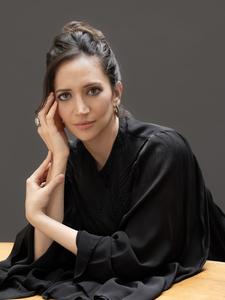
Avia Tadmor photo: Beowulf Sheehan |
|
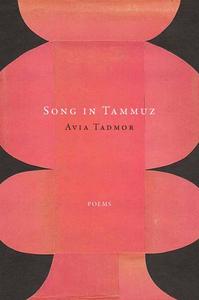
Avia Tadmor's poetry debut is Song in Tammuz (Tupelo Press, October 1, 2026), a collection that draws from an range of literary forms, and winner of the International Berkshire Prize. Her poems have appeared in the Academy of American Poets' Poem-a-Day, Best New Poets, the New Republic, and elsewhere. She has received support from Yaddo, Bread Loaf Writers' Workshop, the Rona Jaffe Foundation, and Poets & Writers. She holds an M.F.A. from Columbia University and is a clinical associate professor at New York University. Born in Jerusalem, she lives in New York.
Handsell readers your book:
Song in Tammuz is a contemporary exploration of displacement, desire, and longing. In conversation with the biblical book of Ruth, these poems span centuries and continents while traversing linguistic forms. Footnotes, dictionary definitions, the lyrical, the elegiac, and the ekphrastic bring old and new together as their speakers seek new definitions of self and of home.
On your nightstand now:
Other Paths for Shahrazad: An Arabic/English Anthology of Contemporary Poetry by Arab Women, edited by Jennifer Jean, a fellow Tupelo Press author, because of the gorgeous polyphony of women, collaborating across cultures and conflicts. This anthology voices such tenderness, brave survival, and hope.
Favorite book when you were a child:
James and the Giant Peach by Roald Dahl. As a child, I was beyond mesmerized by Dahl's quirky, wondrous, and amusing world--the wingspan of its imagination, its coming to life. So much so that my best friend and I built a humongous papier-mâché Empire State Building with a peach on its spire. For fun. Also, especially for any readers living in New York: how amazing it is that what is first mistaken for a bomb (the peach) ends up feeding the children of New York City and housing the protagonists (James and his insect friends eventually make a home of the pit, free of rent, in Central Park)!
Your top five authors:
It feels nearly blasphemous to choose so I'll name my top Marys, all poets, instead: Mary Oliver, Mary Szybist, Marie Howe, and Wisława Szymborska, whose full name was Maria Wisława Anna Szymborska. Each of these brilliant poets uses words to carve starlike holes in our miniscule, daily existence, inviting readers to peer into the vastness through astonishing clarity and courage.
Book you've faked reading:
James Joyce's Ulysses. It was late at night, my senior year, and I just needed to graduate at that point!
 Book you're an evangelist for:
My Trade Is Mystery: Seven Meditations from a Life in Writing by Carl Phillips. I've been returning to Phillips's craft book religiously at the end of every teaching semester for the past few years, as I summon the writing spirits in hope of a prolific winter or summer break. Just as genius in his prose as he is in poetry, Phillips helpfully demystifies essential aspects of the writing life (such as "fame") while honoring the sense of mystery that writing, when it feels worthwhile, necessitates.
Book you've bought for the cover:
Most books I've bought for my daughters (2.5 and six months) on our weekly visits to the Strand Bookstore--most recently, A Color of His Own by Leo Lionni (the edition celebrating 50 years of this classic has a spinning color wheel built into the cover!). Also, so many books from the perennially iridescent world of Eric Carle.
Book you hid from your parents:
I'm fortunate to say that none, ever!
Book that changed your life:
The Giving Tree by Shel Silverstein. If only giving, throughout our lives, was as naïve and yet profound as everything about this wonder of a book.
Favorite line from a book:
"It's like a lighthouse, except that, as one swims towards it, it backs away," by Louise Glück, from her essay "Education of the Poet" in Proofs & Theories. Glück attaches this line to the writing process and to poetry, though it reflects every one of life's most meaningful longings: for language to mean and not only signify, for love to bring unity of bodies or minds, for peace to arrive, and stay.
Books you'll never part with:
I just held my author copies of my poetry debut, Song in Tammuz, for the first time and am thinking about books as beautiful, palpable objects--ones that can be held and also gifted to others. The books I'll never part with are ones that were gifted to me with a personal dedication. Letters to a Young Poet by Rainer Maria Rilke, which my father gifted me with a written dedication after I returned from my first writing residency at the Vermont Studio Center. The second is Author: The Portraits of Beowulf Sheehan. I had the honor and joy of spending a day with Beowulf and his team when he was taking my author photo. The day was full of radiance, attention, and care. It felt like permission to start truly seeing myself as an author. And I can't help but read Beowulf's dedication in my copy of his book as a small, gorgeous poem in itself.
Book you most want to read again for the first time:
The Neapolitan novels by Elena Ferrante. I was completely transported by this series one very difficult summer, several years ago, already as an adult. Ferrante pulls readers into a world still informed by some naïveté, though not uncomplicated and not ignorant of precarity or pain. It brought me back to my girlhood and those early friendships that for a time, we think of as lasting and timeless. Reading these novels, I was both carried back and carried away, a rare and beautiful gift.