

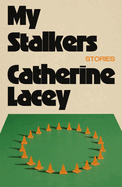
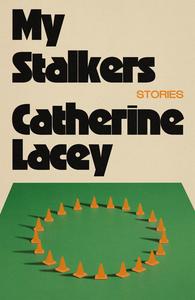
 The nine brilliant stories in Catherine Lacey's seventh work, My Stalkers, express anxiety about misogyny, bureaucracy, and technology through gently absurdist plots.
In "Cut," the take-no-prisoners opener, playwright Peggy has an anal wound of unknown cause. When a friend mentions that her late husband(s) sometimes had sex with her sleeping body, Peggy questions her own husband's nonchalance. Misogynistic violence is a theme all through the collection, especially strong here: Peggy realizes a male voice has always narrated sex in her head; during a one-on-one meeting with a student, she imagines the young man stabbing her; and a female student submits a poem about the "angry man in your house"--cf. The Möbius Book, in which the phrase applies to Lacey's father and to her former partner.
Doppelgängers and red tape abound. In "Coconut Flan," Mexico-based Daria loses her U.S. passport and learns it's been used to smuggle a look-alike across the border. In the Kafkaesque "Congratulations on Your Loss," Enid repeatedly receives reprimands for jaywalking--except she wasn't on those streets at those times. At a government office, she hears her dead mother's voice on the loudspeaker and a computer won't allow her to contest the fines. Will finding her double stop the exasperating cycle? Both stories evoke the panic of having to prove one's identity to a pitiless state machine.
The stories operate by a sort of dream logic--or perhaps nightmares are becoming real. In "Being Shot," set at a "Conference on the State of Modern Thought," gun violence is simultaneously the "American fate" and performance art. The satirical "Who Is She?" features a woman so paralyzed by indecision that she lies down on a median strip and awaits would-be saviors. The surreal comedy "Man Mountain" has a woman attempting to surmount a pile of semiconscious men in rural Kansas.
Details about several protagonists' relationship histories suggest that the stories can be read as autofiction. The question of whether tech actually improves people's lives is fundamental. The "techno-optimism" in "Rate Your Happiness" (e.g., influencer videos and driverless cars) contrasts with Louise's faltering connections with her girlfriend and estranged father. In "My Stalkers," technology enables surveillance and rootlessness.
From outlandish situations, Lacey (Biography of X; The Answers) spins unsettling parables that feature memorable metaphors ("his voice sounded as sad as a caved-in cake"; "she carried me, limp as old celery") and impeccable endings. Her innovative, cerebral fiction is absorbing and essential. --Rebecca Foster, freelance reviewer, proofreader, and blogger at Bookish Beck
Shelf Talker: Catherine Lacey's hard-hitting, absurdist short stories bring home the threats of misogynistic violence and overreliance on technology.