Tuesday October 27, 2026: Maximum Shelf: Good Girls and Alpha Males
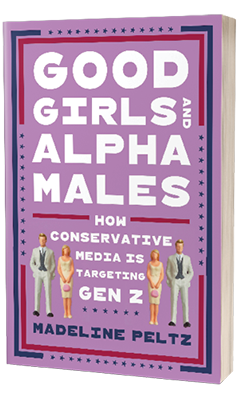
Good Girls and Alpha Males: How Conservative Media Is Targeting Gen Z
by Madeline Peltz
A liberal-leaning journalist and researcher with a decade's worth of experience immersed in the right-wing media universe, Madeline Peltz shares her valuable insights in a timely, engaging debut, Good Girls and Alpha Males: How Conservative Media Is Targeting Gen Z. Sharing the results of her interviews with young people across the political spectrum, Peltz invites readers to consider why young women, in particular, find resonance within the conservative movement and explores the difficult truths preventing the Democratic establishment from building trust with the next generation of voters.
Peltz arrived in Washington, D.C., as a freshly minted graduate on the eve of Donald Trump's 2016 presidential win. Soon after she joined Media Matters for America, a progressive watchdog group tasked with countering conservative disinformation, she gained recognition as the "Tucker Carlson girl" when she unearthed an archive of Carlson's misogynistic radio appearances. A massive uproar ensued at Fox News because of her work.
It is Peltz's fascination with the Republican Party's unparalleled success at channeling the "historic angst" and political discontent of young people "for its own benefit" that drives her narrative. Turning Point USA (TPUSA), the conservative youth organization founded by the late Charlie Kirk, was and continues to be central to the party's effort to mobilize Gen Z voters along gendered lines. Good Girls and Alpha Males opens with Peltz's attendance at Charlie Kirk's memorial at the Kennedy Center, his death occurring just as her book neared completion. She realized how integral a part Kirk's "constant hate mongering" played in her daily work experience when those posts suddenly stopped. Peltz describes Kirk's rise to become leader of the conservative youth movement with an astute, journalistic grasp of his charisma and skill at making young people who are staring down a disappearing job market and wealth inequality "feel like they are part of something bigger than themselves."
Even as TPUSA's popularity soared among Gen Z, a different youth-led movement, this one started in 2018 by survivors of the mass shooting at Marjory Stoneman Douglas High School in Florida, has "withered away." When March for Our Lives first launched, it was "a political 'coming out party' " for Gen Z Democrats, Peltz recalls. But, as she goes on to explain, now it serves as a grim example of how the Democratic establishment "broadly failed young people while taking their support at the polls for granted." She points to how the party refuses "to incubate the next generation of leadership," demonstrating hostility toward the progressive politics of its younger members while octogenarians cling to power. Peltz is at her most passionate when concluding that "if career politicians won't give it up voluntarily, they should be forced out."
She recounts how conservative media's enormously effective youth engagement machine owes its legacy to Howard Stern, the "godfather of the shock jock revolution," and Rush Limbaugh, who in the '80s set the stage for today's right-wing influencers. With misogyny as the basis of his audience appeal, Limbaugh invented "the genre of unrestrained, unrepentant conservative media" that Ben Shapiro channeled with his launch of The Daily Wire in 2015. Peltz explains how right-wing influencers pay attention to their audience's grievances and validate them, "then continually escalate their rhetoric to keep the audience satiated." Thus, the "manosphere" encourages Gen Z men to develop their "alpha male" credentials and to blame their grievances on feminism, Jews, and liberals.
Peltz says the heart and soul of Good Girls and Alpha Males is a chapter on the tradwife phenomenon that emerged in the wake of the Supreme Court's 2022 decision to overturn Roe v. Wade. While attending TPUSA's Young Women's Leadership conference in 2023, Peltz expected that the religious, conservative Gen Z women she interviewed would embrace the tradwife aesthetic promoted by Kirk. Instead, those she met held nuanced attitudes toward marriage and motherhood that also prioritized the importance of education and financial independence. For Abigail, an aspiring orthopedic surgeon, Kirk's warning she might end up dissatisfied with a life with cats instead of children at 35 did not deter her from following her career dreams while also staying true to her conservative roots. Popular female right-wing media influencers like Alex Clark make common cause with young women by channeling their fears about hormonal birth control and vaccines. Here, Peltz shares her own mental health struggles to underscore how easy it can be for a vulnerable young person to be drawn into "internet self-help rabbit holes" and conspiracy theories.
Peltz urges Democrats to engage Gen Z on matters they care about, from Big Pharma to "Israel's genocide in Gaza." Not only is the Democratic Party operating with a "thirty-year messaging deficit," but the Biden administration's hostility toward pro-Palestinian campus protesters alienated many in their voter base. With right-wing influencers speaking to issues facing this generation, it's not enough for Democrats to offer up the "same tepid centrism." In the spring of 2026, Peltz interviewed young people at George Washington University, including Jacob, a left-leaning Californian, who expressed frustration with how Democratic leaders insist on "keep[ing] things the same."
Gen Z, Peltz asserts, is essentially "post-partisan" and is yearning for leadership that recognizes the future is not "left versus right but top versus bottom." Balancing meticulous research with superbly timed levity and wit, Good Girls and Alpha Males makes a compelling case for moving beyond both the "fascist MAGA movement and the feckless Democratic Party establishment." --Shahina Piyarali
Sourcebooks,
$29.99,
hardcover, 352p., 9781464255403,
February 16, 2027
Good Girls and Alpha Males: How Conservative Media Is Targeting Gen Z
by
Madeline Peltz
Madeline Peltz: Connecting the Personal with the Political
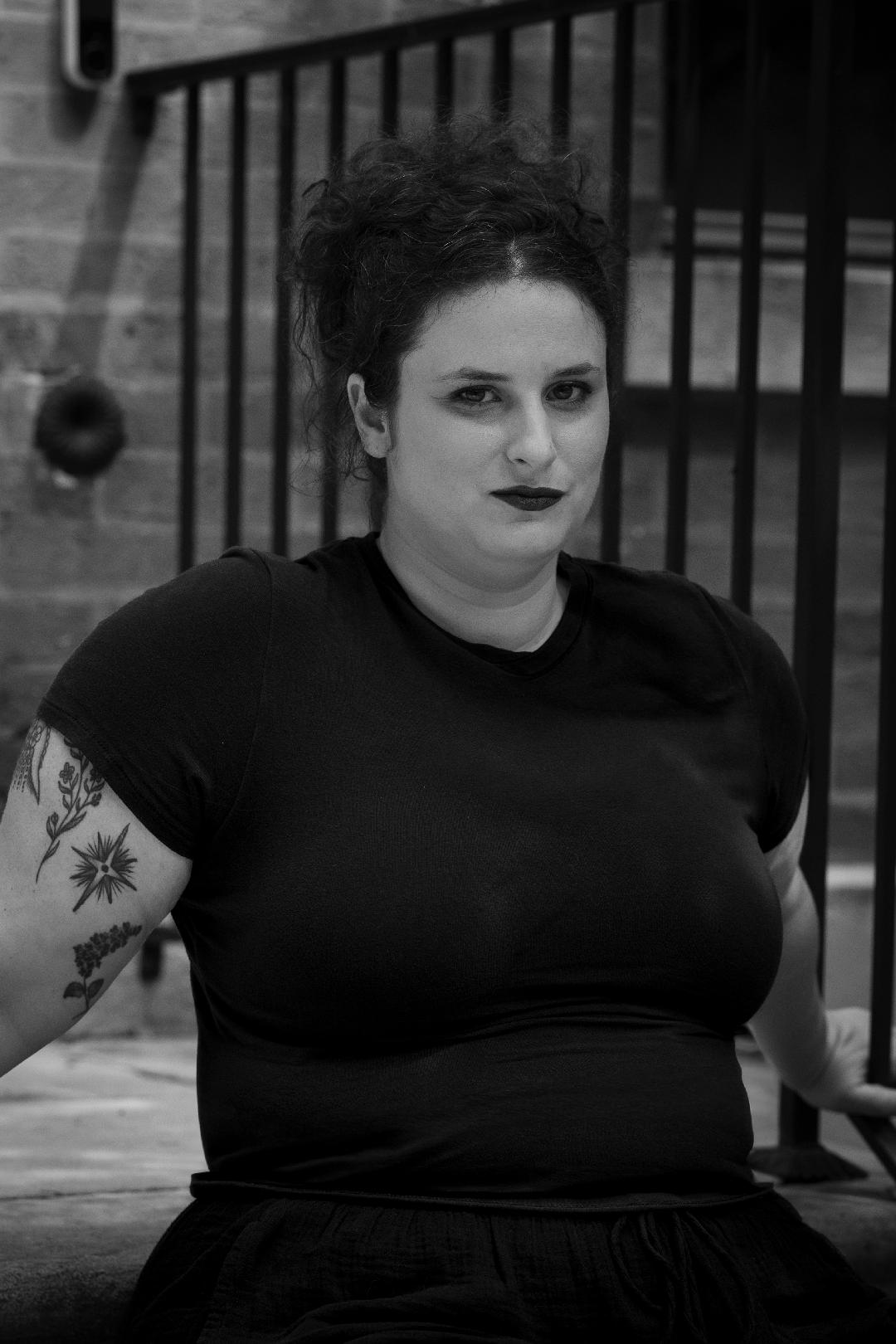
Madeline Peltz (photo: Nora Gregor)
A Chicago native, journalist and researcher Madeline Peltz is a reporter for Media Matters for America in Washington, D.C., a left-leaning watchdog nonprofit tasked with countering conservative disinformation. She has been quoted as an expert on right-wing media and the conservative movement in the New York Times, the Washington Post, and the Guardian. In her upcoming debut, Good Girls and Alpha Males: How Conservative Media Is Targeting Gen Z (Sourcebooks, February 16, 2027), Peltz shares her insights on why right-wing media is resonating with young people and what is preventing liberals from making inroads with this same demographic.
Was there a pivotal event or encounter that deepened your curiosity about the youth conservative movement?
When Dobbs was overturned, it kicked off a discourse about Gen Z women being up in arms about abortion and never voting Republican again. The 2022 midterm confirmed that narrative. But as a researcher and journalist, I saw the inroads Turning Point USA was making with this same demographic, and how quickly Charlie Kirk started counter-messaging that life was actually better without all those pesky civil rights. I wanted to explore that gap in the public's understanding of what was really going on with Gen Z women.
As someone skilled at talking to people of different political persuasions, do you see yourself facilitating a conversation between young Republicans and Democrats to find common ground?
I regularly speak with young people across the political spectrum, as I write in Good Girls.
I would do it without cameras, but a conversation among young Republicans and Democrats would be out of step with a huge swath of Gen Z. Gen Z has the lowest partisan identification of any other segment of the voting population. Young voters do not identify with either party at higher rates than millennials, Gen X, and Boomers. We also know that, despite this, they are interested in current events and have high rates of political participation.
Gen Z politics are being formed in a post-partisan environment. A representative sample of young people might lean in one direction or another politically, but a conversation between them would likely find that many of their concerns share a common core.
It is admirable how you share your own mental health struggles to illustrate how easy it is for a vulnerable person to be influenced by the powerful media machine.
Thank you. It was clear to me from the beginning I couldn't write this book without including my experience of recovering from Borderline Personality Disorder. When you tell people you have BPD, it immediately conjures up a Certain Type of Woman: toxic, manipulative, sexually permissive, and quick to emotional breakdown. This was the exact stereotype that people like Charlie Kirk offered when describing the character foil to the "good girl." I had to connect the personal with the political.
We underestimate the toll that the ambient stress of living under fascism takes on each of us. That is especially true of people who are struggling in one way or another. It makes us vulnerable to grifters, liars, and manipulators who tell us they can provide us with peace of mind--me included.
You observe something truly puzzling about Democratic leadership, that "the party shows more fight against its own left flank than it does against MAGA." What are they so afraid of, and how much of it has to do with support for Israel?
They're afraid of their donors. Democratic socialism is the only credible threat to the billionaire class in this country right now and the donors expect the Democrats to be a bulwark against it. The Democrats are a center-right, pro-business party courting a left-wing base.
The Democrats still fundamentally do not understand just how radically Israel politics have changed since October 7, 2023. The American public is horrified by watching a genocide being live-streamed on their phone, enabled by a liberal establishment that simultaneously claims to be the sole protectors of American democracy. Unwavering support for the state of Israel has also become a proxy for how average Americans feel taken advantage of and lied to. No matter how much 2028 hopefuls stick their heads in the sand, their continued obfuscation will not suffice in this new landscape.
Israel is a client state of the United States of America. Our leaders have a choice, and only one of them is politically viable.
Having failed young women, can liberal feminism be revived?
Corporate interests will always have a stake in selling feminism as a set of individual women's achievements and consumer preferences. This is a tremendous convenience for the Democratic Party. It allows them to hide behind the broken status quo while also claiming to have the moral high ground on women's rights. I see little appetite for this type of feminism among the young people I speak to in my coverage. The so-called "girlboss" feminism of the 2010s is widely discredited among Gen Z. For entry-level workers, employment is a temporary condition, an intermission between getting hired and when your employer figures out how to replace you with a robot. To ask young people, both men and women, to see this arrangement as a pathway to liberation is entirely counterintuitive.
The rise of democratic socialism among disaffected young people should go hand-in-hand with a new feminist movement.
As both political parties focus their attention on the 2028 election, what advice do you have for the Democratic leadership to improve their credibility with young voters?
Listen.
With Gen Z "up for grabs," how likely is it that we will have a third party in the not too distant future?
I'm not a legal expert or a constitutionalist but that seems highly unlikely. I don't see third-party leaders that are consistently engaged with the defense of democracy and marginalized communities. I see people who raise money and go on TV every four years to draw attention to themselves. I think it is possible to dislodge the current leadership of the Democratic Party and bring in a new generation that brings them in a more left direction. But it will be very difficult and every monied interest in this country will go full force to stop it.
I always vote. I'm very much opposed to the anti-voting sentiment in parts of the left, though I understand why so many feel this way. Our ancestors fought and died for the right to vote. I recently had the privilege to participate in a roundtable with a number of different women leaders of gender justice organizations. It was off the record, so I won't say who, but I was tremendously inspired by a leader in the pro-abortion movement who said, "When you get the mic, say your words. Don't worry if they're going to invite you back, because they might not invite you back anyway." I live and work in D.C. and am immersed in the culture of liberalism that has paralyzed the forward progress of the Democratic Party and this country. These are my words to them. I hope I get invited back, but if I don't, at least they'll have heard me. --Shahina Piyarali
Madeline Peltz: Connecting the Personal with the Political