

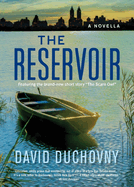
The Reservoir, David Duchovny's spry, wry, and inventive pandemic-set novella, dabbles in a host of genres--mystery, romance, black comedy, adventure--before ultimately circling back to dystopian fiction, a subset of sci-fi, the genre for which the X-Files actor turned novelist (Miss Subways) first became known.
This novella centers on Ridley, a divorced former Wall Streeter who has had time and money on his hands since his early retirement; that he has a distant relationship with his adult daughter isn't the pandemic's doing. From his apartment overlooking Central Park, Ridley has been diverting himself with his "time-lapse art project": before bed, he sets his iPhone on a windowsill facing the Central Park reservoir and activates the camera. One morning, he discovers that in the night, his phone captured flashing lights coming from a building across the park; it turns out the lights have appeared in other recordings as well. He chances an outing across the park in hopes of finding his "secret sharer."
Early on, Duchovny seems to be setting up a thriller--Ridley feels he "could star in his very own retrofitted-for-the-pandemic Rear Window"--but the novella gradually adopts an increasingly heightened reality. Throughout, The Reservoir remains a meditation on loneliness and the analgesic allure of self-deception. The book concludes with the short story "The Scare Owl," in which an owl rescues a baby crow that comes to see him as its father--in other words, another fiction that teases the discomfort of an adult male playing dad. --Nell Beram, author and freelance writer