Latest News
Candlewick Press (MA): The Miraculous Journey of Edward Tulane Deluxe Collector's Edition by Kate DiCamillo, illustrated by Bagram Ibatoulline
October 9, 2026
WHAT TO READ NEXT: REVIEWS OF GREAT BOOKS

Fall always promises an embarrassment of literary riches, and this one brings us new work from some truly remarkable authors. Lydia Millet's Fair Ones delivers an "emotionally astute" work of fiction that transpires "almost entirely in well-crafted dialog" as she considers the fallout from a shocking death that shatters a trio of close friends. Barbara Kingsolver's Partita offers a midlife reckoning for a piano teacher in Tennessee in an "elegant, mature" novel about second chances. Plus, Ayad Akhtar's The Radiance is a finely tuned satire in which a writer develops an "intensely pleasurable" outlook after a biking accident, but it ends up leading to turbulent outcomes across the campus where he teaches. And there's more where those came from!

--Dave Wheeler, senior editor, Shelf Awareness
FEATURED TITLES
Cover

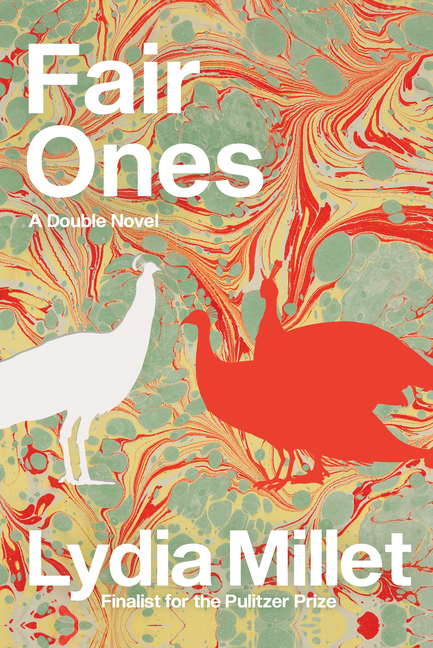
Fair Ones: A Double Novel

Lydia Millet

Lydia Millet expertly depicts the interconnected lives of two women in their 40s who must come to terms with the sudden, violent death of their close friend.

Fair Ones: A Double Novel

Lydia Millet

W.W. Norton | $29.99 | 9781324123675

It's been said that friends are the family one chooses. Lydia Millet's Fair Ones perfectly encapsulates that sentiment. In this emotionally astute "double novel," Millet (Mermaids in Paradise; A Children's Bible) follows the interconnected lives of three female friends after the sudden death of one of them shatters their equilateral triangle and throws the lives of the survivors into turmoil.

Jen, Mara, and Claire are in their 40s when one spring morning, while awaiting the bus that will take her to the high school where she works as a counselor, Claire is felled by a bullet from a gun in the hands of a 13-year-old boy. Jen and Mara are left to carry on in the face of this unimaginable loss.

Told in the understated voice of Mara, the first section spans a year that begins immediately after Claire's death. In Fair Ones's second half, two years later, Jen, who "wielded bluntness like a cudgel," takes over the story. Hers is a more wry, sometimes cynical voice that will bring frequent smiles, the move toward humor perhaps a natural reflection of grief easing a bit. Both experience how growing older can mean supporting their parents, Mara dealing with a mother who has early dementia, and Jen helping her mother cope with a damaged marriage.

The two sections of Fair Ones unfold almost entirely in well-crafted dialogue, which makes this a fast-paced read. Millet expertly reveals the inside jokes and knowing asides that blossom in longtime friendships. This is a story that's honest, warm, and utterly realistic for anyone who's enjoyed the bonds of a close, confiding friendship. --Harvey Freedenberg, freelance reviewer

Cover

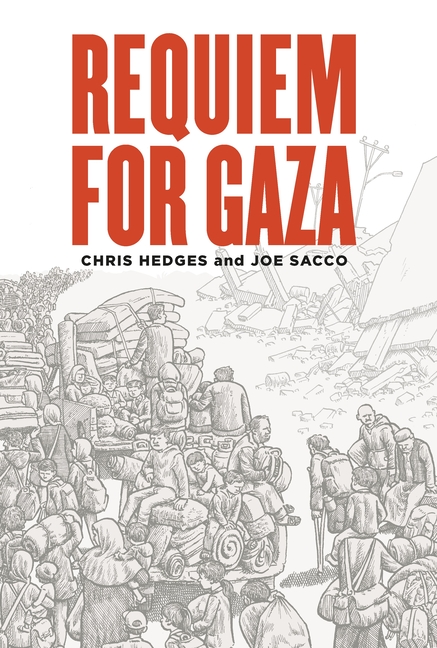
Requiem for Gaza

Chris Hedges and Joe Sacco

Chris Hedges and Joe Sacco's gut-wrenching investigative journalism informs their illustrated Requiem for Gaza, which proves to be difficult but utterly necessary reading.

Requiem for Gaza

Chris Hedges and Joe Sacco

Fantagraphics | $24.99 | 9798875002724

Pulitzer Prize-winning journalist Chris Hedges and multiple Eisner- and Harvey-awarded cartoonist Joe Sacco reunite (after Days of Destruction, Days of Revolt) to create Requiem for Gaza, another wrenching--albeit remarkable--work: "The goal in Gaza is... to wipe out the past and replace it with amnesia, to mask Israeli crimes, including genocide." Sacco's haunting, signature black-and-white panels capture scenes where words are not enough. "This denial of historical truth and historical identity permits Israelis to wallow in eternal victimhood," Hedges writes; such denial is backed by the Donald Trump administration "in lockstep with Israel," funding "at least $21.7 billion in military aid since October 7, 2023." Meanwhile, "eighty-two percent of Israeli Jews support the ethnic cleansing of the entire population of Gaza and fifty-six percent support doing the same to Palestinian citizens of Israel." With facts and figures, supported by more than 20 pages of documentation, the pair bear witness to "erasure... butchery, carnage and loss, as well as resilience, courage and self-sacrifice."

Hedges and Sacco, working with Palestinian American translator Ruba Abu Zannad Jafar, gathered 525 pages of interview transcripts from Gazans who lost (and continue to lose) family members; a fellow journalist counts 150 dead among her extended family. Homes, careers, futures continue to be destroyed. Six intense chapters of narrative and illustration recount that day in October 2023, exodus for those fleeing Gaza, targeted assassinations of medical staff and journalists, the ceasefire that wasn't, the uncertainty of exile, and acts of resistance. The title alone signals that this is challenging, at times unbearable, reading, but to deny these brutally enlightening pages is to condone a "campaign of erasure." --Terry Hong

Poisoned Pen Press: The Witch (Deluxe Edition) by Freida McFadden
Cover

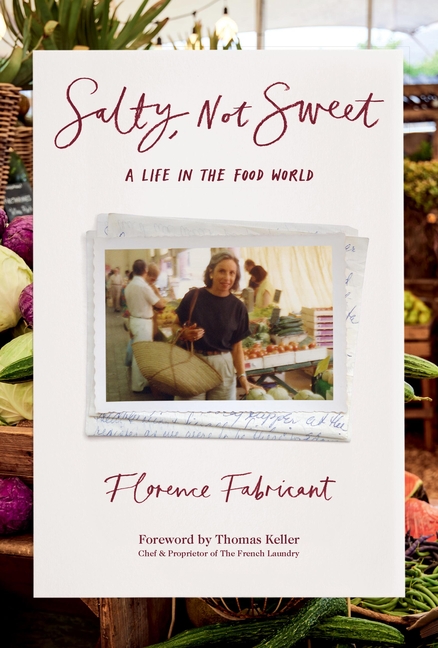
Salty, Not Sweet: A Life in the Food World

Florence Fabricant

Salty, Not Sweet is a sharp, elegant memoir from a writer who has spent more than half a century documenting food culture.

Salty, Not Sweet: A Life in the Food World

Florence Fabricant

Running Press | $32 | 9798894141077

Florence Fabricant's Salty, Not Sweet is a delectable memoir charting more than half a century of culinary evolution through the eyes of one of its most astute chroniclers. For decades, Fabricant's authoritative voice in the New York Times and in her 13 cookbooks has helped shape how we eat, cook, and think about food.

Fabricant writes with a brisk elegance, drawing readers into the bustling kitchens and fragrant international markets and dining rooms she has frequented since the 1960s. Her narrative pace mirrors the exhilarating rhythm of the hospitality industry, blending personal history with the broader cultural shifts that turned North American gastronomy on its head.

Fabricant's descriptions of the dishes and ingredients encountered during her formative travels are sublime. Whether she is relating the precise architecture of a classic bistro dish, the earthy perfume of any number of cheeses, or the crisp, buttery lamination of an authentic Parisian pastry, her prose evokes flavors vividly enough that readers can almost smell the herbs, coffee, or wine. Fabricant's dry humor appears throughout. Reflecting on the embrace of balsamic vinegar by the U.S., she writes that "the leaves of arugula and romaine in American salads would never be the same, doused with dark, sweet, tricked-up imitations that even included the improbable white balsamic vinegar."

Salty, Not Sweet succeeds as both a memoir and a history of the North American restaurant world. Fabricant was present for many of its defining moments, and she records them with the authority, wit, and restraint that have long distinguished her work. --Elizabeth DeNoma, executive editor, DeNoma Literary Services, Seattle, Wash.

Cover

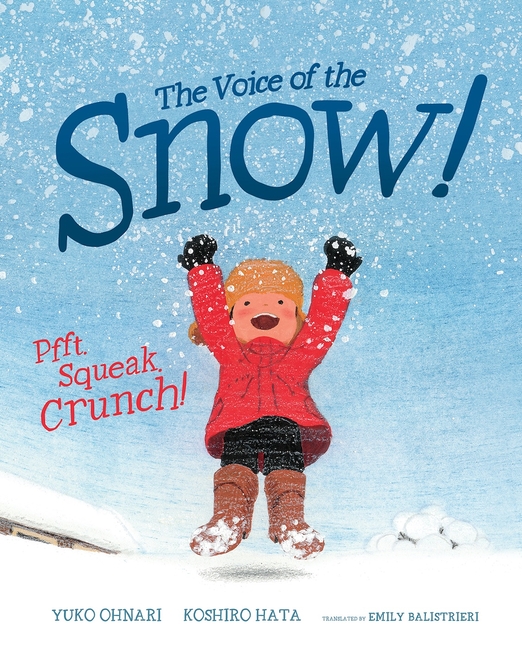
The Voice of the Snow!

Yuko Ohnari, trans. by Emily Balistrieri, illus. by Koshiro Hata

The Voice of the Snow is an exuberant, child-centered picture book romp through the joyful sounds--and silence--of a bright snowy day.

The Voice of the Snow!

Yuko Ohnari, trans. by Emily Balistrieri, illus. by Koshiro Hata

Red Comet Press | $18.99 | 9781636552033

The Voice of the Snow is an exuberant, impeccably child-centered story by Yuko Ohnari and Koshiro Hata, the creative duo behind Downpour, and translated from the Japanese by Emily Balistrieri. The picture book features a child who revels in the wonder of a snowy day by focusing on the joyful sounds--and silence--of the snow.

"It is so bright outside my window that it woke me up.... Snow!" The child pulls on a red jacket and oversize hat and goes outside. As the kid takes the first boot-sinking step, "the snow says, 'Pfffft.' " Then the bundled-up child begins a trek across the yard, and the snow responds: "Pfft, squeak. Pfft, pfft, squeak, squeak." The snow "is laughing!" The child makes a huge snowball--"huff-puff, huff-puff"--and the snow counters with "creak-eak, creak-eak." The kid throws the ball into the air and it breaks apart, hitting the ground with a sound like "crumb, crumb, crumb... Pock, pock, pock." When their "voice gets sucked into the snow," the world goes silent. On this quiet, magical morning, both the young adventurer and the snowflakes are "listening closely."

The creativity of this storytelling technique gives the book's observations a tactility and sense of immediacy. Much of the child's cavorting through the wintry backyard landscape is told through Ohnari's avalanche of onomatopoetic interpretations. The writing is spare and confident, and Balistrieri's translation feels as poetic as it does enthusiastic. Hata's illustrations pull equal weight, depicting the youngster's tramp from their front yard into a neighboring empty lot and back home, where an adult waits. These wonder-filled pages should inspire all varieties of wintertime listening. --Lynn Becker, reviewer, blogger, and children's book author

Alvina Ling Books: There's a perfect story for every reader! Enter for a chance to win!
BOOK REVIEWS
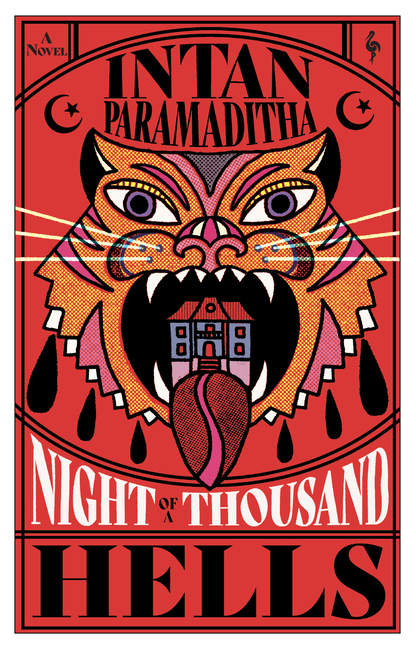
A suicide bomber's older sisters confront the brutal tragedy's aftermath in Intan Paramaditha's provocative, chilling Night of a Thousand Hells.

Night of a Thousand Hells

Intan Paramaditha, trans. by Stephen J. Epstein and Tiffany Tsao

Europa Editions | $18 | 9798889662129

Indonesian author/academic Intan Paramaditha, who lives in Sydney, offers the chilling Night of a Thousand Hells, a sprawling, polyphonic examination of horrific suicide bombings. Stephen J. Epstein returns as translator after The Wandering and Apple and Knife, joined by novelist Tiffany Tsao (The Majesties).

On May 13, 2018, six bombers associated with an ISIS-connected organization detonated three explosions in Kotawijaya, Indonesia. A family of four were among the perpetrators--Annisa, the mother; Muhammad, her husband; Gibran, their nine-year-old son; and Patricia, their two-year-old daughter. Paramaditha introduces Annisa as "the beautiful sister, the pious one, the apple of Papa's eye." Her death means her story must be told by others: "This is a tale of three sisters," Paramaditha promises. "The two who remain seek clues--why, whose fault, when?" Mutiara, the oldest, is "the caretaker," the role both "duty and curse." On the other side of the world is Maya, "the traveler," who first landed in New York City with a graduate school scholarship. The gruesome cataclysm calls her back to resentful Mutiara to face the aftermath of Annisa's incomprehensible decisions. To do so will require confronting the past, including their grandmother's manipulations, their parents' secrets, and their own actions of betrayal and destruction.

Paramaditha likely found inspiration in a May 2018 three-part suicide attack in Surabaya, Indonesia, in which a couple involved their young children. Paramaditha effortlessly blends dysfunctional family epic, haunting folklore and horror, with themes of suffocating traditions, pervasive gender inequity, and LGBTQ+ discrimination and identities. "There is no answer to be found in this story, no magic pill," she warns. Bearing witness is the only alternative. --Terry Hong

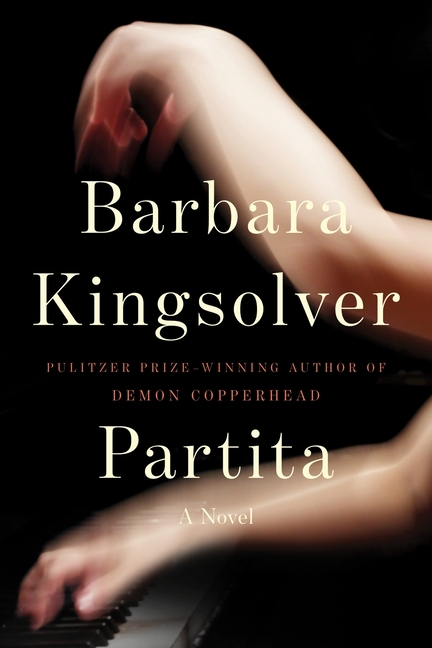
Barbara Kingsolver's down-to-earth 10th novel considers class, fate, politics, and generational trauma through the story of a pianist's shattered career.

Partita

Barbara Kingsolver

Harper | $32 | 9780063577541

In Barbara Kingsolver's bittersweet 10th novel, Partita, a piano teacher revisits a tumultuous period in her life after an old flame makes contact.

Livia Cable looks back from midlife at the multiple misfortunes that seemed to blight her life and recognizes the enduring power of music and the siren call of unhealthy family patterns. One day, she hears from her ex, Sigurd. He asks to meet, regretful at how they left things decades ago. Livia is content with her husband, Charlie, and their dog on their Tennessee farm, but as she clears her late mother's house and plunges into memories of her torrid affair with Sigurd in the week before his visit, her composure wobbles.

Past and present alternate in sections titled after musical terminology ("Overture," "Prelude I," etc.). When Livia met Sigurd, a left-wing community organizer, in spring 1989, she was a music scholarship student at Indiana University in Bloomington--a fish out of water from rural Tennessee, a virtuoso with perfect pitch. With Sigurd she experienced instant, addictive physical passion. When Sigurd is unexpectedly transferred to Phoenix, Livia is forced to choose between love and music. Soon after his departure, though, a career-ending accident made the decision for her--and ruled out motherhood, too.

How to carry on with dashed hopes? Livia is a chastened heroine in the classical vein, but Kingsolver (Demon Copperhead; Unsheltered) is equally interested in foundational wounds such as a cold mother and the loss of a brother to suicide. Patient readers will welcome an elegant, mature work reminiscent of Ann Patchett's. And the ending? Perfection. Partita reassures with its promise of second chances. --Rebecca Foster, freelance reviewer, proofreader, and blogger at Bookish Beck

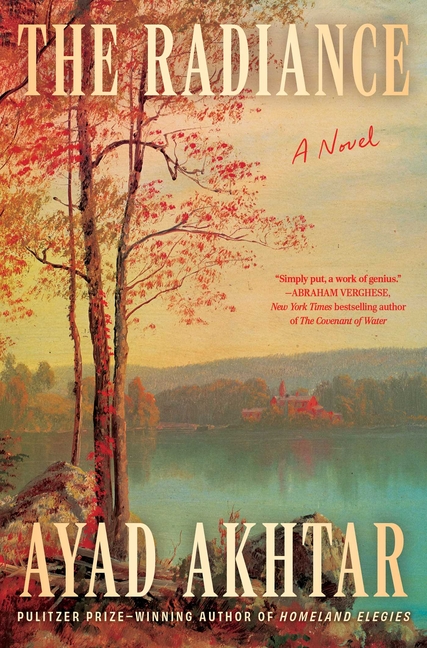
A New York writer temporarily relocates to the Hudson Valley to complete his book in this darkly entertaining novel by a Pulitzer Prize-winning playwright.

The Radiance

Ayad Akhtar

Summit Books | $29 | 9781668078631

Set amid the cultural wildfires and fraught sexual politics of the #MeToo era, The Radiance by Pulitzer Prize-winning playwright Ayad Akhtar (Homeland Elegies) elegantly merges intellectual inquiry, cultural critique, and high drama to spectacular, often satirical effect as its narrator navigates a trifecta of tumultuous changes in his life.

A fictional New Yorker bearing the author's name temporarily relocates to the Hudson River Valley to complete his novel and is hit by a truck while bicycling on a remote country road. The crash, a possible hate crime, unleashes neurogenic changes marked by a "sublime burning calm" and an intensely pleasurable "radiance." The practical impact of this aural shift emerges when the narrator agrees to teach an autofiction class at the local university. Whereas once he would have scoffed at how many of his students consider themselves "disabled in some way," the post-crash Ayad views their "shared agreement in frailty" through a pleasing "brain fog" of nonjudgment.

Ayad's campus colleague Lucie features prominently in his thoughts as a "harmless infatuation," their bond platonic yet erotically cerebral. When Susan, a troubled student, teeters over the edge of self-destruction, it triggers a campus-wide reckoning over her inappropriately close relationship with Lucie that also implicates Ayad. What finally snaps his crash-induced "beguiling inner repose" is a family revelation that sheds heartbreaking light on his late father's troubled life.

A formidable storyteller, Akhtar frames his darkly entertaining third novel as a fictional memoir of a "non-Muslim Muslim-American" still processing the aftermath of his recent adventures in the "Christian-inflect[ed]" rural United States. --Shahina Piyarali

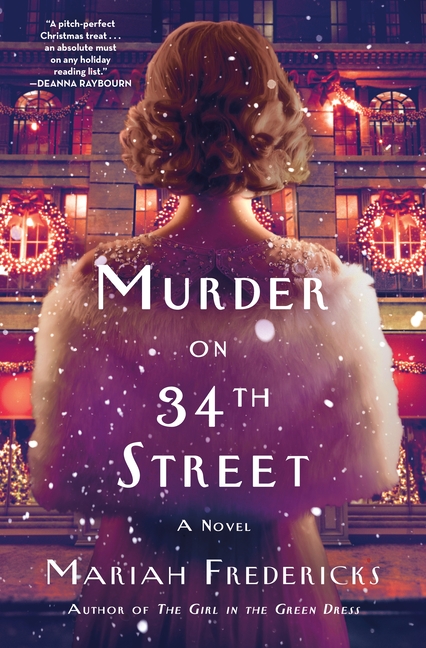
This engrossing thriller set in 1932 delves into a woman's behind-the-scenes planning of the Macy's Thanksgiving Day Parade and her transformation into an amateur sleuth when someone is killed.

Murder on 34th Street

Mariah Fredericks

Minotaur Books | $29 | 9781250367549

The Macy's Thanksgiving Day Parade is a ritual that, for many, kicks off the holiday season. Mariah Fredericks's Murder on 34th Street takes place in 1932, with the parade in its ninth year and establishing traditions that are still in play decades later. The event's intricate planning falls to Grace Verlander, assistant to the head of Macy's personnel department, and often the smartest person in the room. Grace fills her days leading up to Thanksgiving juggling the egos and demands of Macy's employees who want to be in the parade and those who don't, deciding where to place balloon animals and floats, and scouring Macy's departments for clothes and accessories for the participants to wear.

At least she's found her Santa Claus: Harry Gardner from children's shoes. But Harry begins receiving death threats before he even dons the red suit. A murder during the parade followed by two more deaths prompt Grace to investigate. Fredericks (The Girl in the Green Dress) utilizes Grace's natural organization skills to create a formidable amateur sleuth as Grace works to find the killer and save Macy's reputation as the place to shop.

Murder on 34th Street taps into New York City's culture during the 1930s, showing the Great Depression's impact on shopping and the iconic parade's beginnings. Fredericks's skill in rendering the historical era is especially notable. She delves into the behind-the-scenes planning of the early parade, simpler than the present-day version but still elaborate for its time. Grace has enough to worry about in Fredericks's engrossing historical thriller without planning Broadway musical interludes, too. --Oline H. Cogdill, freelance reviewer

Sourcebooks Explore: What Rhymes with Pterodactyl? by Raj Haldar, illustrated by Emi Ordás
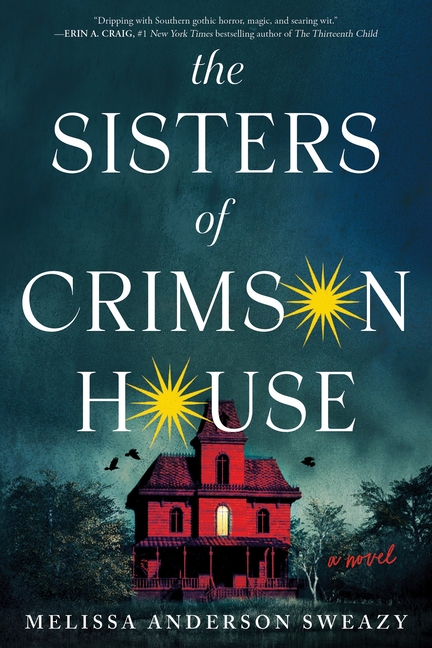
The daughter of a famous psychic bloodline confronts her family's darkest secrets in this eerie, suspenseful Southern gothic horror fantasy.

The Sisters of Crimson House

Melissa Anderson Sweazy

Sourcebooks Landmark | $18.99 | 9781464272356

Terrible secrets and sibling rivalry bedevil two supernaturally powerful sisters in Melissa Anderson Sweazy's first novel, the eerie, suspenseful Southern gothic horror fantasy The Sisters of Crimson House.

Teenager Charley Bryde has spent her childhood in the shadow of the women in her psychically gifted family, each of them marked from birth with a sign called the Seeker's Star. Charley has no Star on her palm and has "never heard the dead whispering back." Her talented sister, Miranda, channels ghosts in the family's exclusive stage shows while Charley watches enviously from the sidelines. Her frustration leads to a disastrous choice that leaves Miranda injured. Their parents rush her to seek care, but their car is found crashed and inexplicably filled with water, both adults drowned inside and Miranda unharmed. Their aunt takes Miranda away but not Charley. Eight years later, Charley fights to stay solvent by passing herself off as a psychic and the Brydes' historic mansion as a haunted attraction. Miranda suddenly returns just as the Seeker's Star begins to appear on Charley's hand, and a dark family secret fights to rise into the light.

Ghosts, mysterious lore, and other assorted bits of spookiness adorn this chilling story of grief and belonging. Sweazy perfectly captures the brooding atmosphere and buried truths essential to the gothic tradition. Readers who enjoyed the sibling dynamics in Rachel Harrison's Play Nice will find similar elements of frayed family ties here, wrapped up in a twisting resolution that will leave its audience satisfyingly haunted. --Jaclyn Fulwood, blogger at Infinite Reads

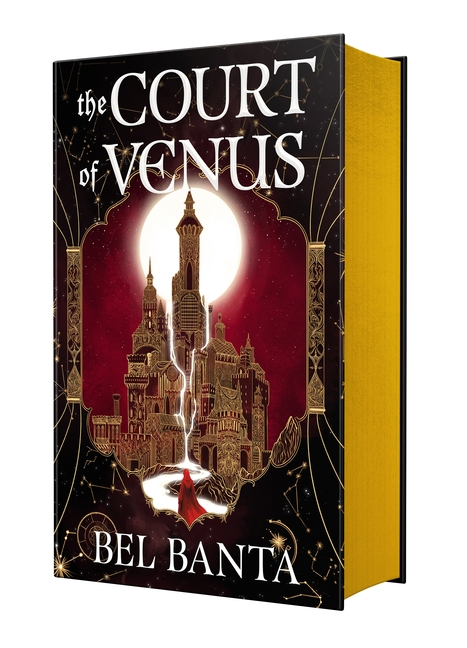
In this lush romantic fantasy set at a Tudor-inspired court full of scheming, rival magicians must work together to discover the truth behind the murder of the king's son.

Court of Venus

Bel Banta

Tor | $29.99 | 9781250437136

Childhood rival magicians compete in a tournament while secretly investigating a murder at a Tudor-inspired court full of deception in Court of Venus, a lush romantic fantasy by Bel Banta.

In Alvion, magicians are aligned with one of seven planets. Those aligned with Mercury are gifted with language and communication, those under Venus manipulate desire, and Bianca's exceptionally rare Moonborn transformation abilities are as sought after as they are mysterious. She can alter emotions and shape-shift into animals or other people, but few know the extent of her abilities.

After years of service in a private household, Bianca is summoned by her childhood rival, Roland, back to the court of Alvion for a magicians' tournament to celebrate the coronation of the newest queen. Bianca grew up amid the court's machinations and treachery, alongside the profligate Venusborn Roland and the king's only son, Hal. Now Roland has taken on their executed mentor Prospero's duties as court magician and lord chancellor, and he needs Bianca's help to finally discover the truth behind Hal's death years ago.

Once rivals for Prospero's attention, Roland and Bianca must now work together and use their talents to gather information from an increasingly dangerous court. The more they investigate, the closer they get to each other and the awful truth that altered their lives forever. Fantasy readers who enjoy courtly intrigue, cheeky rivals-to-lovers romance, and Tudor trappings will love Court of Venus. Banta's debut novel is perfect for fans of Holly Race's Six Wild Crowns and Antonia Hodgson's The Raven Scholar. --Suzanne Krohn, librarian

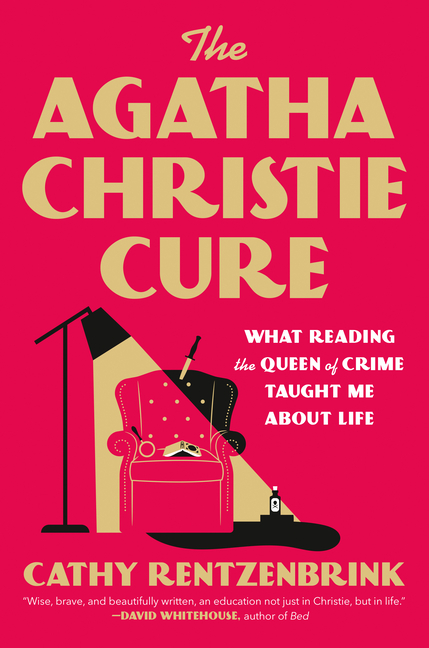
Part biography and part literary escape, The Agatha Christie Cure is a heartwarming exploration of the comforting power of fiction.

The Agatha Christie Cure: What Reading the Queen of Crime Taught Me About Life

Cathy Rentzenbrink

Viking | $32 | 9780593835302

The Agatha Christie Cure: What Reading the Queen of Crime Taught Me About Life begins with a curious question: "Have You Ever Wanted to Run Away?" Agatha Christie did, famously disappearing from home for 11 days in 1926 before abruptly reappearing 184 miles away, in Harrogate. And Cathy Rentzenbrink (A Manual for Heartache) did too. Worn out from a grueling schedule of literary events and a marriage in turmoil, as well as difficulties supporting her son, who has learning disabilities, Rentzenbrink turned to Christie, whose works had been her comfort reads since childhood.

Rentzenbrink decided to reread all of Christie's books as an escape of sorts for herself, and to do so in publication order to watch Christie's development as an author. Throughout this hybrid memoir, Rentzenbrink splits Christie's writing into eras: "The First Six," "Harrogate," "Aftermath," "Trial by Ordeal," "The Elephant Years," and so on. These eras correspond with events in Rentzenbrink's own life as she muses on her marriage, parenting, her father's cancer, and the death of her brother when they were young.

Part biography of Christie, part analysis of Christie's novels, and part memoir, The Agatha Christie Cure is wholly fascinating. Rentzenbrink analyzes Christie's oeuvre concisely and draws sometimes surprising conclusions from her life: "No wonder she wrote so many books with no internet to lure her off her chosen path." The Agatha Christie Cure is perfect for fans of the Queen of Crime or for anyone who's ever found comfort in fiction during a challenging time in their life. --Jessica Howard, former bookseller, freelance book reviewer

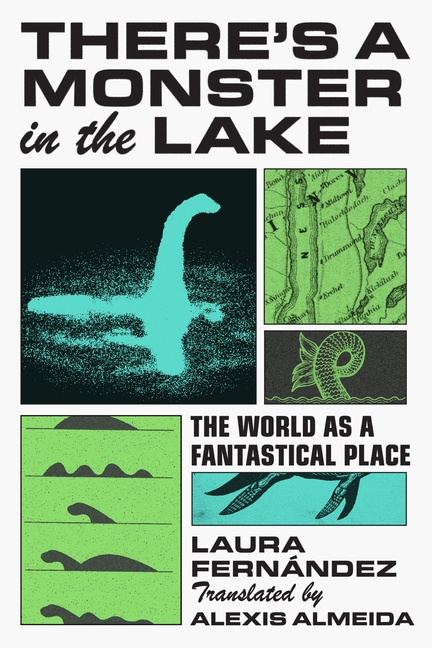
Spanish journalist Laura Fernández travels to Scotland to investigate the Loch Ness monster in this playful yet commanding philosophical long-form essay.

There's a Monster in the Lake: The World as a Fantastical Place

Laura Fernández, trans. by Alexis Almeida

Graywolf Press | $16 | 9781644454190

The truth behind the Loch Ness Monster transcends the simple question of existence in the playful yet commanding philosophical long-form essay There's a Monster in the Lake by Spanish journalist Laura Fernández, who writes for El País, and translated by Alexis Almeida.

Fernández explores the legend of "Nessie" at its source, a dark body of water in the Scottish Highlands where a plesiosaur allegedly lurks, forgotten by time and rediscovered by a few lucky observers now and then. She charts sightings from the original 1933 incident through decades of fabricated proof to the 21st century, when anyone can post their supposed Nessie run-ins online in the Official Loch Ness Monster Sightings Register. The possibility of the monster brings tourists to a location that "must endure the (MONSTER)," whose inhabitants are seemingly embarrassed at the air of camp the whole charade casts over their community. The essay does not overly concern itself with whether the monster is real but instead with why people want it to be and what the state of reality means in the first place. Fernández invites readers to peer into "the (BREACH) that the Loch Ness (MONSTER) opened. Which opens... the certainty that reality is a construct permanently under construction."

This thought-provoking and quietly humorous meditation on a caricaturized cryptid transforms it into an emblem of imagination and the secret hopes that feed the human spirit. Fantasy-genre readers, travelogue fans, and lovers of new perspectives should enjoy this precisely phrased journey through the philosophy of the fantastical. --Jaclyn Fulwood, blogger at Infinite Reads

Sourcebooks: Doubles (Silver Beach High #1) by TZ Layton
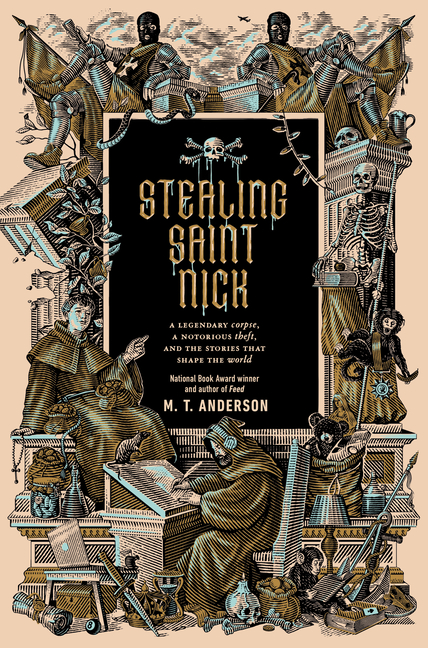
This suspenseful, intriguing, and downright fascinating work of YA nonfiction chronicles the history of one of the world's most famous saints.

Stealing Saint Nick: A Legendary Corpse, a Notorious Theft, and the Stories That Shape the World

M.T. Anderson

Dutton Books for Young Readers | $20.99 | 9780593699546

National Book Award and Newbery Honor winner M.T. Anderson (Elf Dog & Owl Head) turned his fascination with Saint Nicholas into Nicked, which he calls a "swashbuckling heist novel" for adults. But after the book's publication, Anderson discovered overlooked, mischaracterized, and forgotten details. He has connected those precious finds with his original research in the absolute treasure Stealing Saint Nick, a YA nonfiction account of Saint Nicholas that is suspenseful, intriguing, and downright fascinating.

Anderson recounts the "legendary" and "notorious" events in the history of this famous saint: imprisonments, miracles, and body thefts. He breaks Nicholas of Myra's story into three parts--"Nikolaos," "The League of Saint Nicolas," and "A Jolly Old Elf"--to mirror the three major religious shifts he considers important to the story of Santa Claus. Nicholas lived through monotheistic Christianity's upheaval of Roman polytheism and became bishop of Myra, in what is now southern Turkey. After his death, Nicholas became one of Christianity's paramount saints and his bones were said to "drip... an ooze that heals all wounds, all diseases." Thieves "translated" (i.e., stole) his remains from Myra to Italy during the second religious movement of which Anderson writes: Christianity to Islam. Finally, Anderson describes the third stage as Christianity to consumerism in the U.S.--when Saint Nick became Santa Claus.

Stealing Saint Nick includes considerable back matter with notes, a bibliography, and even a crime scene analysis. Anderson's historical account is captivating, and he consistently challenges readers to consider sources, analyze and synthesize information, and ask their own questions. This work is a true gift for any reader--especially those with an investment in Santa Claus. --Jen Forbus, freelancer

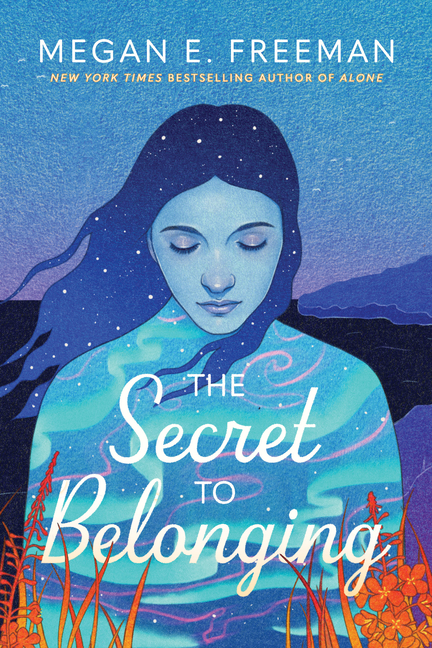
A neglected teen heals with found family while studying abroad in Norway in this poignantly cathartic young adult novel-in-verse.

The Secret to Belonging

Megan E. Freeman

Atheneum Books for Young Readers | $19.99 | 9781665988407

In The Secret to Belonging, poet and middle-grade author Megan E. Freeman (Alone; Away) delivers an introspective, cathartic YA novel-in-verse about a neglected teen coming-of-age as an exchange student in Norway.

The novel's unnamed narrator, a high school junior in 1980s California, is "the invisible child" in her family--her parents have devoted themselves to managing her older brother's cocaine addiction and criminal behavior. The protagonist fantasizes about going to college to escape her harrowing home life, but her parents use her tuition fund to pay for her brother's latest rehabilitation program. With college no longer an option, the narrator's best friend encourages her to apply for a Rotary Club scholarship to study abroad during her senior year. The narrator receives the scholarship and travels to Norway, where the support of her picture-perfect host family and new friends forces her to confront her fear of getting close to anyone.

Freeman's artful use of the second-person perspective is unusual in poetry and allows for a rousing story with a satisfying catharsis. The protagonist's time in Norway is healing, but her growth while abroad is grounded in realistic highs and lows: first love is exhilarating yet heartbreaking; learning a new language and way of life is rewarding and intimidating. Cultural details, such as the narrator's job at a California video store and the consistent use of Norwegian when she is studying abroad, cultivate a strong sense of time and place. Recurring poetic motifs, such as the image of a bruised, locked-away heart, offer poignant insights into the narrator's inner world. --Cristina Iannarino, children's book buyer, Books on the Square, Providence, R.I.

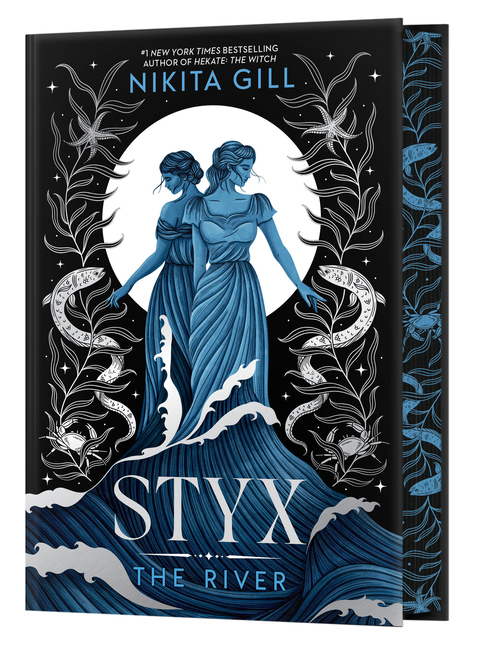
This heartwrenching YA exploration of loneliness and grief reinterprets a chthonic goddess to consider what it means to be a woman.

Styx: The River

Nikita Gill

Little, Brown Books for Young Readers | $21.99 | 9780316581851

Styx: The River, the stunning second installment of Nikita Gill's Goddesses of the Underworld trilogy (Hekate: The Witch), is a mournful, moving novel-in-verse about the firstborn child of the Titans.

Styx's sisters and brothers, the Oceanids and Potamoi, respectively, are born as multiples. Styx, the eldest, who was born alone, finds solace in companionship with her cousin, Asteria. Together, the girls discover that they have godlike transformative abilities and powers of creation, despite Kronos's decree that only the Potamoi would be allowed to become gods. Styx and Asteria keep their talents hidden for fear of anyone learning what they can do. As the girls grow into formidable young women, Kronos becomes desperate to maintain control and tightens his rule of the Titans.

Styx is set before the downfall of the Titans and traces the events leading up to their war with the Olympians. Gill breathes new life into one of the chthonic goddesses of Greek myth, a figure typically considered more monstrous than sympathetic, by humanizing the events of her life. The novel shifts perspectives between Styx and Asteria, who each narrate their feelings about their friendship and the turmoil that leads to the overthrow of the Titans. Gill expertly uses these shifts in perspective to highlight Styx's loneliness and the impact of familial neglect. Styx invites readers to consider the choices women have in a world that tries to command them; it will likely be appreciated by fans of Sarah Underwood's Lies We Sing to the Sea or Joy McCullough's Blood Water Paint. --Michelle Anya Anjirbag, freelance reviewer

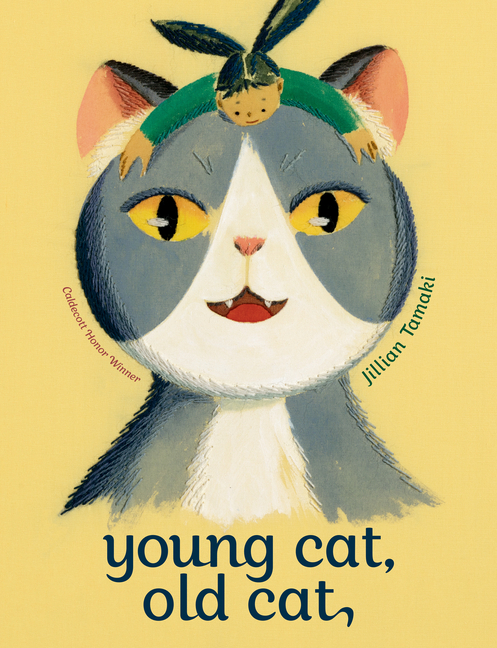
Jillian Tamaki combines fabrics, acrylic inks, and embroidery to create a multilayered homage to the long life of a little gray cat in this poignant picture book.

Young Cat, Old Cat

Jillian Tamaki

Viking Books for Young Readers | $18.99 | 9780593694312

Jillian Tamaki, illustrator of the Caldecott Honor- and Printz Honor-winning graphic novel This One Summer, presents Young Cat, Old Cat, an engaging, visually beguiling picture book inspired by "an opinionated little gray cat named Gretel, who lived to be almost twenty-two years old."

On the opening page, a tiny gray and white "baby cat" mews. On the opposite page, the same kitten is one "hopeful cat" among others as it reaches up for human attention. The kitty's chosen child drops down, eye to eye, to ask, "Be my cat?" And so their bonded lives begin as the "scaredy-cat" travels into the unknown, where it leaps out and lands in a new home as a "finally free cat!" Time inevitably passes, and aging is unavoidable. Seemingly suddenly, the once-energetic furry becomes an "oh-so-tired cat." Eventually, a faraway wave of "goodbye, cat" sends the kitty high into the heavens; a gray/blue night sparkles with stars forming the shape of a cat. The next illustration shows the celestial creature shrinking until a final double-page spread features a small gray and white "brand-new cat" saying hello with a tiny "mew."

Tamaki's spare narrative will likely cause sympathetic tears, though the fanciful, magical ending may also be interpreted as a comforting rebirth to assuage devastating loss. Most striking is Tamaki's art, which gorgeously reveals even more of the plot than her unadorned, straightforward narrative. An author's note details her work in multilayered mixed mediums, which results in amplified complexity, transforming flat pages with notable depth and dimension. Young Cat, Old Cat proves to be a gift to readers and a lingering, celebratory homage to everlasting cat love, memorialized through inventive, exceptional illustrations. --Terry Hong

Post Wave: The Green Child by Hollie Hughes, illustrated by Britta Teckentrup
The Writer's Life

Aaron Blabey discusses the first title in his Game of Pets series, The Boy Who Knew Too Much, featuring Griff, a reserved boy with a plethora of allergies. Griff's new pet axolotl, Bob, tells him that all the pets on Earth are working together to convince humans to destroy the planet. Blabey spoke with us about his interest in the differences between generations, and how he decided to write about global catastrophe enacted by pets.

The Writer's Life

Aaron Blabey and Game of Pets: An Unexpected Collision of Ideas

photo: Rahkela Nardella

Aaron Blabey is an author/illustrator with some 60 million copies of his books in print. Many of his kids' book series--The Bad Guys, Pig the Pug, Thelma the Unicorn, and Cat on the Run--are beloved around the world. Blabey executive produced the DreamWorks Bad Guys movies and the Netflix animated musical Thelma the Unicorn.

The first title in his new Game of Pets series, The Boy Who Knew Too Much (Odd Dot), features Griff, a reserved boy with a plethora of allergies, and his pet axolotl, Bob. Here, Blabey chats with Shelf Awareness about social interactions between the generations, creating illustrations that read "outer space," and where he comes up with his bonkers ideas.

Tell our readers what Game of Pets is about.

A kid with allergies named Griff wants a pet. He gets one--an axolotl--but he gets more than he bargained for. The axolotl can talk, and Griff doesn't like what he has to say: every pet on Earth is secretly an avatar in service to a diabolical intergalactic game show, and the purpose of the game is to see how quickly they can get humans to destroy their planet by encouraging us to make poor ecological choices. Griff is the only human who knows the truth and only he can save us.

I was laughing out loud before I even reached part one. What made you want to start the book with a commercial for aliens? And especially one that a reader would not understand?

That's just my brain. I have no rational answer for that. If it made you laugh, though, I did my job.

The illustrations and formatting of that first section have a very The Jetsons vibe. Did you have a specific inspiration for how you wanted the game to look?

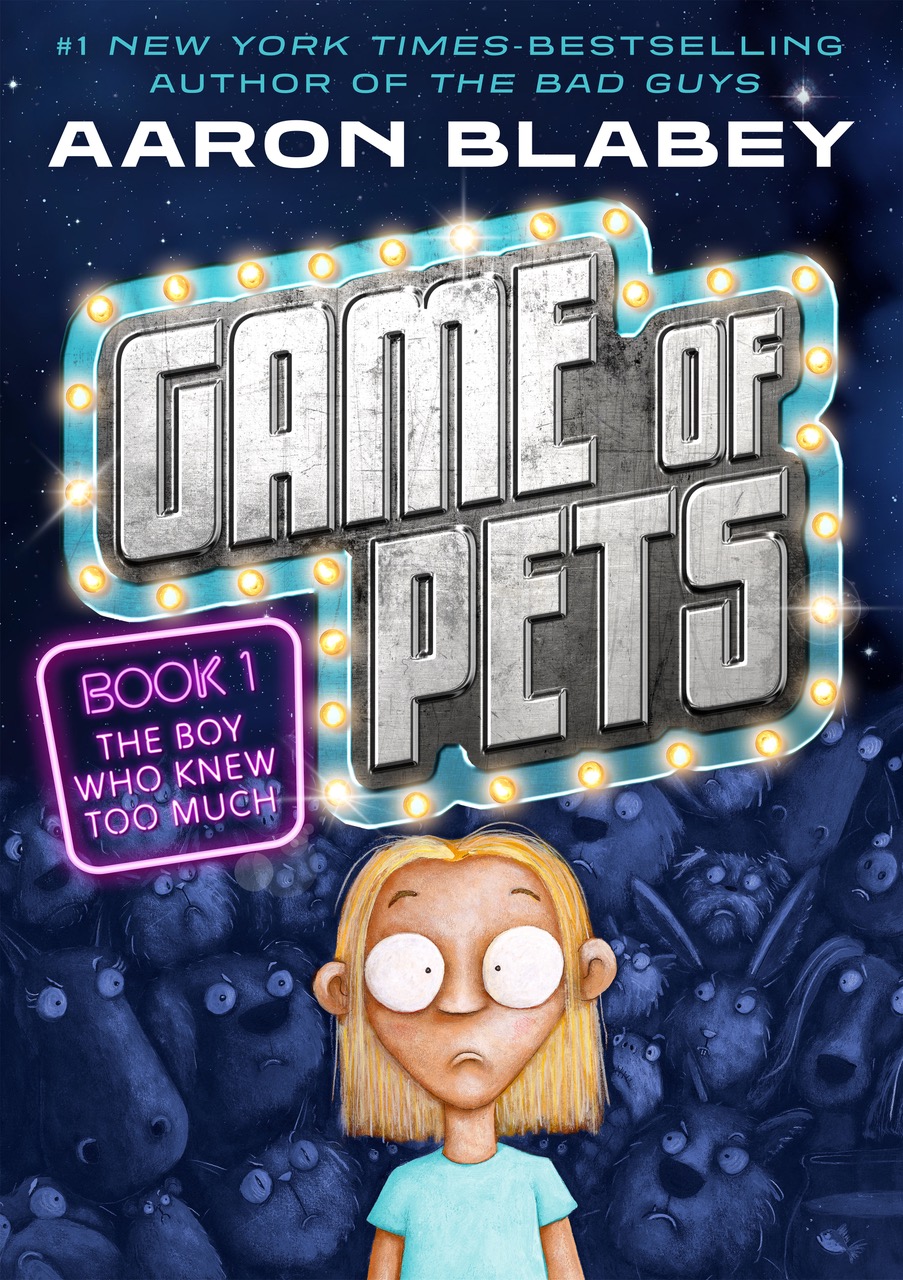
My directive for the cover title lockup was "The Empire Strikes Back meets The Price Is Right." That summed it up nicely, I thought.

I have to say The Jetsons never crossed my mind, but I did want there to be a visual shorthand at the start to make it clear immediately that we were in "outer space." The book has a big concept. It was important to make it clear from page one so that kids could get it right away.

The aliens/pets have a very retro style of talking (Bob the axolotl asks Griff the kid "You dig?" at one point). Was there a specific inspiration for the pets' speaking style?

Nah, I just like having characters talk in ways you don't expect them to. The Bad Guys was the same. You are, hopefully, taken aback by their cadence and attitude in a way that makes them seem real on some level, despite the madness swirling around them.
The premise is--and this is a positive--bonkers. "Which player will be the first to get the humans to burn it all down?" What made you want to put climate destruction and pets together?

That's the game for me. Finding an unexpected collision of ideas that might appeal to a kid looking for something fun to read. The Bad Guys was no different--shady "bad" animals trying to go good. I'm never entirely sure where this stuff comes from. In this case, though, it means I can load a story up with some pretty significant truths about the world we live in, but keep it entertaining by inserting those truths into the vehicle of a "bonkers" action comedy. And yes, I take that as a compliment.

Bob the axolotl says, "It's not one big scary event that'll end the world. It's millions of tiny little nasty suggestions." That's a chilling truth. How do you think kids--who are inheriting this world from us--will take Griff and Bob's quest?

I hope they like the story and, maybe, think about the element of truth that underpins the narrative. The series will raise a LOT of questions about the world, but the context--the delivery of those questions--is never preachy or dry. I have a sign on my studio wall that reads "DON'T BE BORING." I think that's a good rule of thumb when doing stuff like this. Hopefully, this is the first children's book series about global calamity that is consistently funny and deranged whilst starting some bigger conversations about what we're all doing here. We shall see.

Why an axolotl? And why Bob?

Who knows? He's pretty cute though, yeah?

Tell me about The Pet Shop Lady. Where did she--and her dog and her monster truck--come from? Why does she say so many things that Griff thinks are insensitive?

I love Carol. She's a bunch of people I know, but she's also a bit of me too. Just like Griff is partly me. I like walking around and stepping into the shoes of each character, informing them with a grain of truth, no matter how absurd the situation might be. I'm also fascinated by the varying sensitivity levels of different generations. Carol (Gen X) and Griff (Gen Alpha) have such different ways of looking at things. It's a running gag throughout the series, seeing how they learn to navigate each other until, eventually, they become an inseparable team.

I have a deep appreciation for Griff's dislike of the outdoors. Is this character color or can we anticipate Griff having to do some intense outdoorsy activities?

Griff ends up going WAY beyond what he thought he was capable of.

Do you have an idea of how many books will be in this series?

It is a six-part series, currently being written in its entirety.

Will we ever learn why fish "really creep" Griff out?

Perhaps. I couldn't possibly say.
 --Siân Gaetano, children's and YA editor, Shelf Awareness

Shearline Press: Join the discussion with Brian Tyler Cohen and author Dmitri Mehlhorn
Book Candy
Rediscover

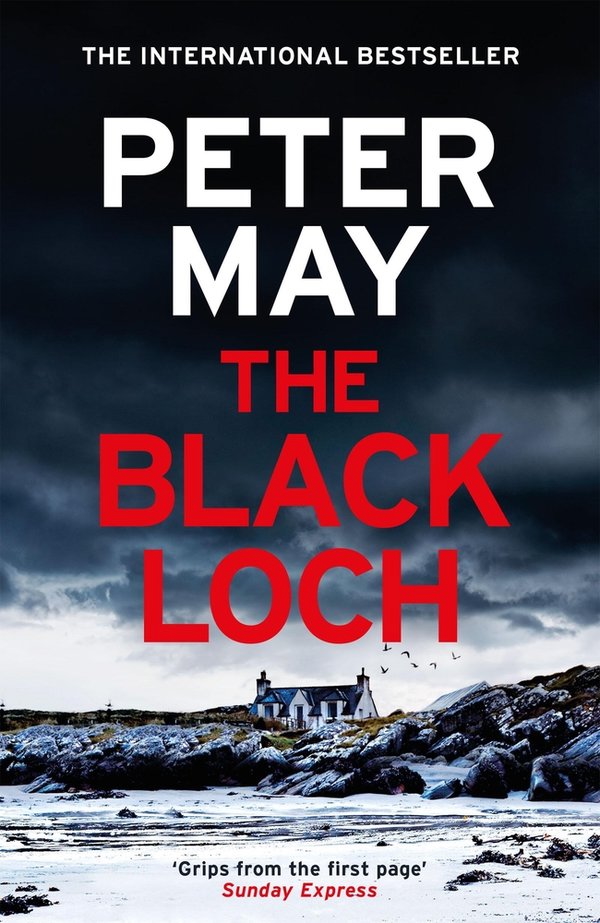
Scottish crime writer and screenwriter Peter May, best known for his Lewis trilogy, died September 25 at age 74. May's books have sold 15 million copies around the world. He wrote a series of thrillers set in China, followed by the Enzo Files, set in France, but it was the publication of The Blackhouse (2011), the first in the Lewis Trilogy, that brought international fame. May published a bestseller almost every year between The Blackhouse and his most recent title, The Black Loch (2024). 

Rediscover

Rediscover: Peter May

Scottish crime writer and screenwriter Peter May, best known for his Lewis trilogy, died September 25 at age 74, the Scotsman reported. May's books have sold 15 million copies around the world. Scotland's First Minister John Swinney said: "Very sorry to hear this news. I have hugely enjoyed Peter May's evocative books set in the Hebrides. His description of events in some of the most precious places in our landscape was so stunning. I extend my sympathy to his family."

May was a journalist before publishing his first novel, The Reporter (1976), at 26. The book was adapted as a BBC drama series, prompting him to leave journalism for television. Over the next 15 years, he became a successful scriptwriter and producer on two series, Take the High Road and the Gaelic-language Machair, set on the Isle of Lewis. It was while working on location for Machair that his love for the Hebrides was sparked.

He returned to fiction with a series of thrillers set in China, followed by the Enzo Files, set in France, but it was the publication of The Blackhouse (2011), the first in the Lewis Trilogy, that brought international fame. May published a bestseller almost every year between The Blackhouse and his most recent title, The Black Loch (2024). 

Noting that May "was one of the most popular, and loved writers of crime fiction of his generation," Jon Riley, his longtime publisher and friend, said: "Peter was a talented musician, and in 2025 he released a CD, Towards the Light, which reflected in song many of his interests as a novelist. Although he had announced his retirement, which he was looking forward to sharing with his beloved wife, the writer Janice Hally, May found there was one more novel in him, and he delivered Island of the Dead in July this year. He was preparing for a farewell tour of Scotland and Lewis to coincide with publication in January 2027."

Riley added: "Peter May was not only one of the best writers of crime fiction we had, but he inspired enormous affection in his readers and in those lucky enough to work with him. His kindness, generosity and largeness of spirit, loyalty, engagement with life, and the world, made him a much-loved, as well as much-admired figure. He is irreplaceable."

Many of May's books, including the forthcoming Island of the Dead, are available in the U.S. from Riverrun/Quercus.

Left Field Publishing: Fortune and Glass by John Mutter
PICK OF THE WEEK

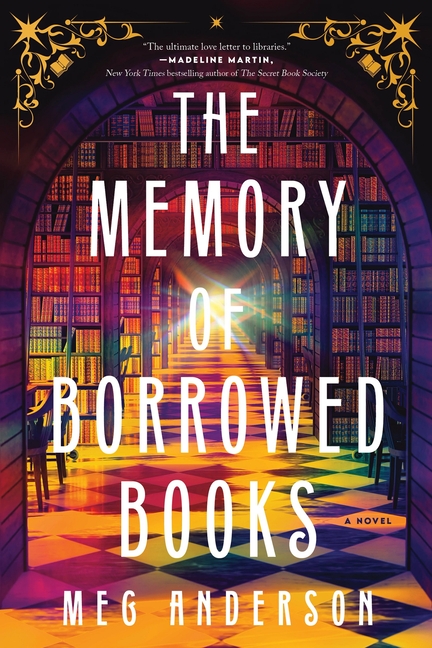
Meg Anderson's charming debut novel, The Memory of Borrowed Books, blends bookish intrigue, light fantasy, and escapist romance in an irresistible combination. As the librarian of cozy Foxhollow Bay, Mass., Claire Ashford appears to have an enviable life. She lives in a quaint, blue-shuttered cottage near the shore; she has her father, Jack, and her co-worker, Grace, for moral support; and she's flirting with Julian, a brooding patron who passes his days sketching at Foxhollow Library. But lately Claire has been fretting over the fate of the library. News is spreading that the board has plans to sell the historic building to a developer. Yet this library is a trove not just of books but also of local people's memories, held in the volumes of a magical basement archive.

PICK OF THE WEEK

The Memory of Borrowed Books

by Meg Anderson

Meg Anderson's charming debut novel, The Memory of Borrowed Books, blends bookish intrigue, light fantasy, and escapist romance in an irresistible combination. As the librarian of cozy Foxhollow Bay, Mass., Claire Ashford appears to have an enviable life. She lives in a quaint, blue-shuttered cottage near the shore; she has her father, Jack, and her co-worker, Grace, for moral support; and she's flirting with Julian, a brooding patron who passes his days sketching at Foxhollow Library. But lately Claire has been fretting over the fate of the library. News is spreading that the board has plans to sell the historic building to a developer. Yet this library is a trove not just of books but also of local people's memories, held in the volumes of a magical basement archive. The secrets Claire discovers there help her to understand herself and her patrons, and bolster her determination to do whatever it takes to save the library.

Ever since Claire was a girl, reeling from the loss of her mother and afraid that her firefighter father might not make it home one night, Foxhollow Library has been "her comfort, a shelter from the sleepless nights that had plagued her since childhood." The insomnia and anxiety has never left her, and her father is still so worried about her that he calls his 30-year-old daughter every day. She knows she should be grateful for his concern, but she chafes at her father's overprotective attitude. A part of her is rebellious, longing for freedom and adventure.

And find it she does. One evening, after the library has closed to the public, she's in the basement and spots a door she's never noticed before. It opens into a room that shouldn't exist: an archive lined with towering shelves of glowing books with titles like The Summer I Forgot Her, What Wasn't Said, and The Morning We Should Have Held Onto. When Claire opens these magical books, she seems to be bodily transported into the scenes they depict, whether fragments of everyday domestic life or pivotal moments of decision. These are memories, she realizes. One book in particular captures her interest: The Night I Left, which shows her a forlorn man on a fog-shrouded bridge. The tableau is strangely familiar to her from Julian's sketches--but also from the mists of memory.

As Claire spends more time with Julian at the library, and on dates, she is drawn to his solemn courteousness and teasing sense of humor. She senses a deep sadness in him, though; a once-carefree nature has been buried under trauma. And as she reads from the basement archive at night when she can't sleep, she starts to piece together clues from his past. The Guilt I Carry replays Julian's high school years, when he, Quinn, and Eddie were inseparable friends. As graduation neared, Julian and Quinn paired off romantically and started to plan an escape from Foxhollow, while Eddie, caught between a violent father and a chronically ill mother, became resigned to the fact that he might never get to leave.

The mystery of how Julian and Eddie's friendship soured continues to mount as Eddie, too, becomes a frequent visitor to Foxhollow Library. Claire is frustrated that, 15 years later, the two men can't just talk through their ongoing issues. But Claire's attention is soon overtaken by her library's fate. The board, with its focus on budgets and statistics, has decided that the library is not fit for purpose and too expensive to maintain. There are discussions with a developer who proposes tearing down Elias Holloway's 19th-century building and replacing it with a multiuse facility: shops, café, and luxury condos. An indignant Claire prepares to fight. Luckily, she's not alone: locals with memories--happy or tragic--stored in that hidden room join to protest outside the town hall and tell the board how much the library means to them.

Anderson's fluid prose propels the tense questions building over what will become of the library and how the central relationships will evolve. The novel contains sensitive depictions of mental health struggles, including obsessive-compulsive disorder and suicidal ideation, yet the serious subject matter never overwhelms the gentle tone. The supporting cast is delightful, particularly Grace--a firecracker of sarcastic wit--and Gus, the faithful old dog Claire adopts. Like The Ten Thousand Doors of January by Alix E. Harrow, this isn't quite romantasy yet entices with hints of magic realism and a will-they-won't-they romantic subplot. The content is sweet rather than spicy, making the book suitable for teens as well.

In a prefatory note, Anderson characterizes The Memory of Borrowed Books  simply as "a love letter to libraries." The idea of magical books that house memories is enticing, and no doubt will have readers thinking about the book-filled spaces that are significant to them. Bibliophiles have always known that books are magic, but Anderson's captivating first novel turns that idea into a literal reality. --Rebecca Foster

Sourcebooks Landmark, $18.99, paperback, 352p., 9781464278372, October 6, 2026
Sourcebooks Landmark, $18.99, paperback, 352p., 9781464278372
Click here to read our interview with Meg Anderson

PICK OF THE WEEK

Meg Anderson: Books Feel Like Home

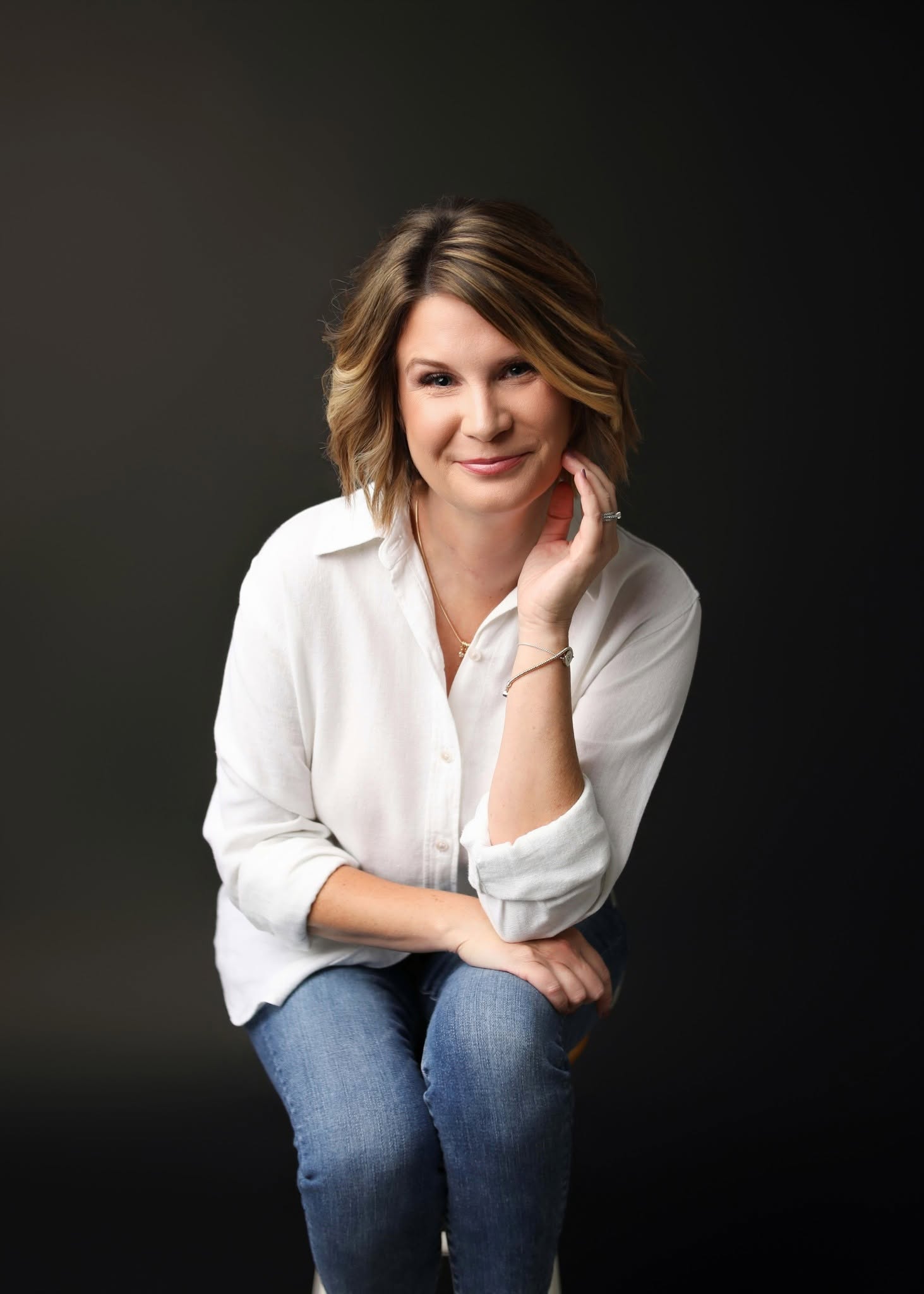
Meg Anderson
(photo: Amanda Hakes/Betty+Bobby Photography)

Meg Anderson resides in Indiana with her husband, three children and four very opinionated cats. She lives with multiple sclerosis, a part of her life but never the whole story. Writing has always been her outlet, and somewhere along the way, she discovered that putting words on the page helped her make sense of the world around her, sparking her love for writing stories. In her debut novel, The Memory of Borrowed Books (Sourcebooks Landmark), a Massachusetts librarian discovers a magical archive in the basement of her historic library building, which is threatened with imminent closure. The trove of memories she finds there helps her understand herself and her customers, including one particular patron and love interest, Julian. 

What libraries have shaped you?

The library that shaped me most was my high school library. I was the girl who skipped the cafeteria and ate lunch between the shelves because it was the one place I truly felt seen. I learned early on that books and the places that hold them can feel like home, and that sense of comfort and belonging stayed with me long after I graduated. And, in many ways, that's what inspired The Memory of Borrowed Books. I wanted to write a story that honored that same magic libraries hold for people who need them most.

Now, I get to watch my own three children fall in love with stories inside our own small-town library, and I think there's something incredibly special about seeing that same sense of wonder passed on to them.

What are some other beloved places you had in mind when you were building the world of Foxhollow Bay?

One of my favorite things to do whenever my husband, three children and I travel is to look up the nearest library. Over the years, I've fallen in love with the way so many of them sit at the heart of their small towns, and through visiting all different kinds of libraries, I really found myself drawn to places that felt layered with history and memory, which also became such an important part of building Foxhollow Bay.

I loved the idea that Foxhollow Library was once the home of the town's founder centuries earlier, because so much of this story explores the way places hold onto people, carrying traces of both what's been lost and what still remains. I also think that's part of what makes certain places feel almost alive to us: their walls still remember the stories that came before.

Although Grace has heard rumors about a hidden room in the library, Claire seems to be the only one who can see it. Then when Julian gets hold of one of the magical books, he also journeys into its story. How did you decide on the "rules" for this archive?

I always intended for the hidden room to mirror the way our own minds work through compartmentalization and the spaces we create for the memories we try to protect ourselves from, ultimately burying or avoiding them altogether. That idea naturally led to the room only revealing itself when someone is truly ready to confront what they've been carrying, which is also why Julian is eventually able to access the books as well. And in a larger sense, the magical books then become emotional truths that characters have spent so long trying to outrun, finally forcing them to face the parts of themselves they've hidden away. But at its core, the hidden room was never really about magic alone, it was always more about what happens when we finally allow ourselves to remember.

The novel expounds on the idea that the truth only finds you when you're ready for it. What are some truths that you resisted or weren't ready for in your life, until finally you were?

I think one of the hardest truths I learned, especially while writing both Claire and Julian's stories, was that healing isn't always linear. Much like the memories hidden inside some of those books, there were once parts of my MS diagnosis that I wanted to lock away and never revisit again. But through writing this story, I found myself beginning to work through many of my own fears and uncertainties. It really taught me that while some grief never fully disappears, time does have a way of making it a little less heavy to hold.

All over the world, libraries face the threats of budget cuts, censorship, and closure. Does Foxhollow Bay offer a model for how to resist?

Claire learns that saving a library is never a task that can be done alone. She finds her voice through the people around her and realizes just how much the library matters not only to her, but to the entire town.

More than anything, I wrote this story for libraries and librarians everywhere. They are the backbone of the communities they serve, fighting every day to protect access to stories and the connection they provide. I hope this book reminds people to never underestimate the power of using their voice, even when it feels like no one is listening, because stories have always had the ability to move people, and when communities come together to protect the places they love, real change really can happen.

What would be Claire's ideal book-and-snack combination on a sleepless night?

Claire would absolutely reach for a well-loved classic like The Secret Garden on a sleepless night. It's one of the books she says once held her together when nothing else could. Alongside it, she'd most likely choose her longtime ritual of warm milk, a deep breath, and then back to bed, just like her mother used to tell her when she was little.

Are you working on another book? What can readers look forward to in the next one?

I am! My next novel still lives within that same magical, bookish world, but this time we're downsizing to Little Free Libraries. As much as I love libraries, I also have such a soft spot for those tiny ones, too.

This story explores identity and the paths we take in life--the ones we choose and the ones we leave behind. It looks at how we can love the life we have while still grieving the one we once imagined for ourselves. It's about realizing that it's never too late to reclaim that version of yourself you thought you lost. I cannot wait for readers to step into these pages and meet these characters. --Rebecca Foster

Advertisement

Sourcebooks Landmark: The Memory of Borrowed Books by Meg Anderson

Select titles from Independent Publishers
Bluepen: Gratitude: Two Hundred Short Poems by A.H. Morris Winner of a 2024 Readers' Favorite Bronze Medal in Poetry. Explore the human condition through succinct, thought-provoking verses that offer fresh perspectives and linger long after reading.
Learn More
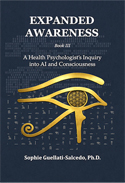
SGS Quantum Press: Expanded Awareness: A Health Psychologist's Inquiry into AI and Consciousness by Sophie Guellati-Salcedo A health psychologist examines AI's effects on human judgment, authorship, agency, and consciousness. "An analytical psychological survey of how AI reflects human thought patterns."
--Foreword Reviews
Learn More
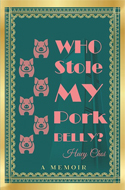
Huey Choi: Who Stole My Pork Belly? A Memoir by Huey Choi A lyrical memoir of family, identity, and resilience--revealing how quiet rituals and everyday acts of kindness and compassion can lead to healing, freedom, and self-discovery.
Learn More
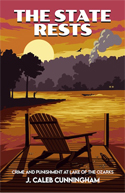
Istina Publishing, LLC: The State Rests: Crime and Punishment at Lake of the Ozarks by J. Caleb Cunningham A prosecutor's darkly funny true account of crime and politics at the Lake of the Ozarks. "Consistently compelling."
--Kirkus Reviews
"[A]bove the typical prosecutor memoir."
--BlueInk Review
Learn More
Advertisement
Powered by: Xtenit