Latest News
Peachtree Teen: You're No Better (Deluxe Limited Edition) by Andrew Joseph White
October 23, 2026
WHAT TO READ NEXT: REVIEWS OF GREAT BOOKS

Life, death, faith, and philosophy prompt some of the most gnawing questions for all of us. For Christian singer Julianna Glasse, it was books themselves that carried her through the dark night of the soul she describes in her thoughtful memoir, This Is What Happens When Women Read. For the late Dutch poet Lieke Marsman, a terminal diagnosis spurred her to investigate the unknown and the unknowable, ruminations she documented in On Another Planet They Can Save Me. And for journalist Kristen Millares Young, familial abuse sent her searching for deeper answers than the ones she'd been handed, charting a new path in the memoir Desire Lines. As comforting as answers can be, what a determined mind can do with the questions is often far more compelling.

--Dave Wheeler, senior editor, Shelf Awareness


FEATURED TITLES
Cover Biography & Memoir

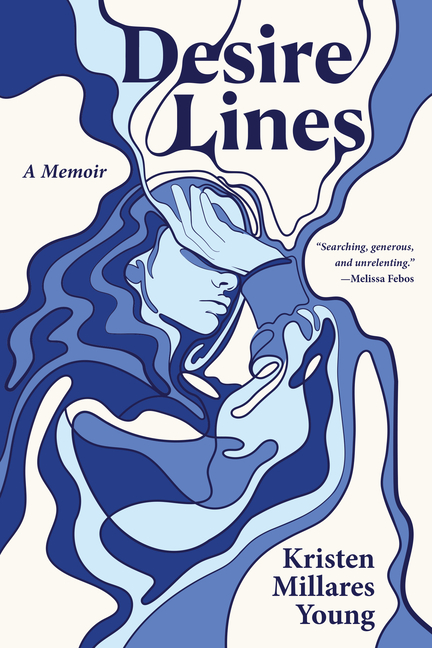
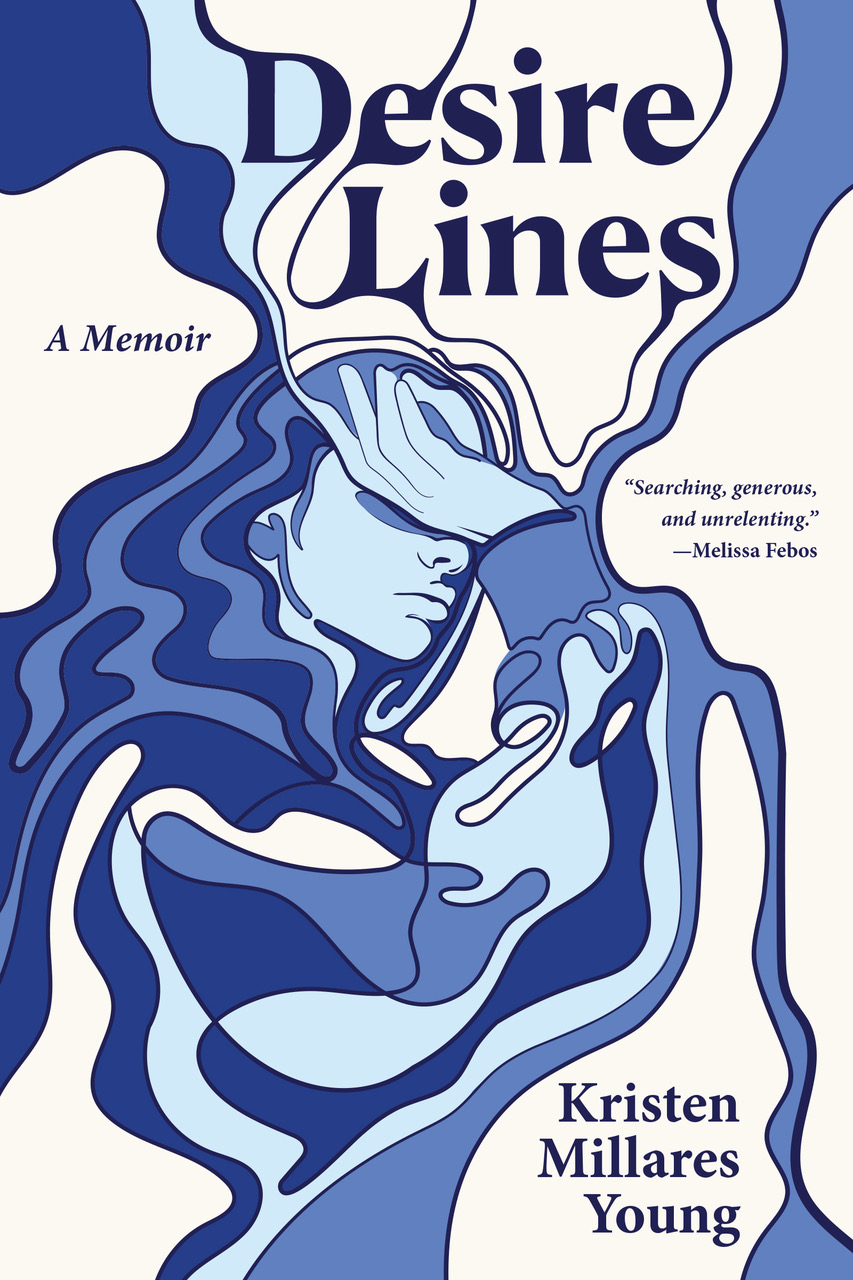
Desire Lines: A Memoir

Kristen Millares Young

In this memoir-in-essays, a Cuban American journalist recounts learning of a ferocious and powerful ancient Roman mother goddess and the remarkable parallels between their life stories.
Cover Biography & Memoir

Desire Lines: A Memoir

Kristen Millares Young

Red Hen Press | $17.95 | 9781636285009

Accomplished storyteller Kristen Millares Young's communion with an ancient mother goddess and her quest to reconcile the incongruities of her "maddening matriarchs" provide an intriguing thematic framework for her first memoir-in-essays, Desire Lines. The Cuban American author's 15 essays traverse volcanic landscapes and oceanic depths, Spanish villages and Parisian museum archives, in pursuit of "unfettered" joyful mothering and "a version of femininity" she can believe in.

Desire lines, Young (Subduction) explains, are "paths that emerge, eroded yet unforeseen, next to the routes that were planned for us." Raised in Florida by her abuela and abuelo while her mercurial mother, Carmen, supported the family, Young was expected to embrace Catholicism and remain silent about the abuse she suffered at the hands of her maternal grandfather, a pedophile. "Paternal indifference" and Carmen's refusal to confront what happened to her daughter affect the author "more deeply than the abuse itself." The essay "Of Meteorites and Matrimony" recounts Young's artistic and literary discovery of the Roman goddess Cybele, an "archetype of women's sexuality." Cybele's wielding of her ferocious power fascinates the author, because it stands in contrast to the women in her family who refused to assert their own powers to protect Young in childhood.

As the author gazes through the clarifying lenses of midlife, motherhood, and a loving marriage to make peace with her past, Young provides an intellectually courageous road map for readers reconciling the cracks in their own family narratives. Embedded with gems from other feminist icons, Desire Lines is the graceful work of a writer triumphantly exerting her right, "like a goddess," to bask in her "own radiance." --Shahina Piyarali

Cover History

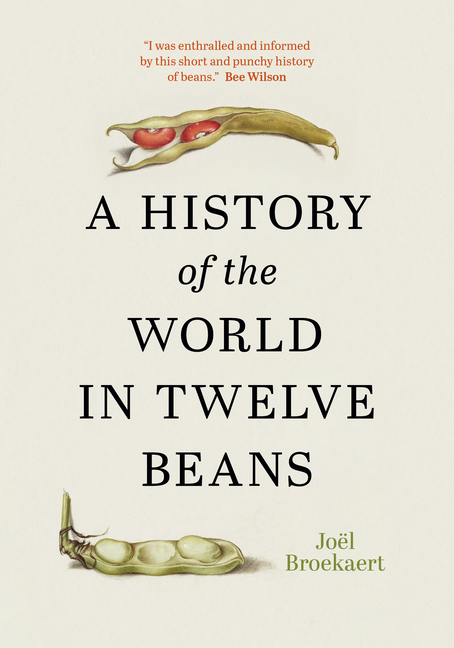
A History of the World in Twelve Beans

Joël Broekaert, trans. by Michele Hutchison

A Dutch culinary journalist offers a brisk, entertaining, and informative tour across time using beans as a focal point and launching pad to broader world history.

A History of the World in Twelve Beans

Joël Broekaert, trans. by Michele Hutchison

Greystone Books | $22.95 | 9781778403545

Intriguing facts and entertaining true stories serve as the lattice of A History of the World in Twelve Beans by Joël Broekaert, translated by Michele Hutchison. Broekaert, a Dutch culinary journalist with a background in history (and judge on his country's Celebrity MasterChef), takes readers on a brisk, friendly tour of world history using beans as a focal point. He begins his bean journey with the biblical story of Jacob and Esau, in which lentils are a key feature, and ends with how the protein-rich lupin bean might help save the world from climate change. In between, Broekaert stops in--among many locations--the Aztec Empire, where "everything was priced in cocoa beans, from turkeys to sex," with the acknowledgement that cocoa beans are the seeds of fruit (therefore, not a legume); and the Napoleonic era, when canning was invented by French confectioner Nicolas Appert, who was looking to win a prize for food preservation. The first food to be canned was, of course, beans.

Unlike beans (cue a humorous section that employs ancient Greek philosophers to expound on the persistent issue of beans and flatulence over time), Boekaert's writing is easily digestible. He has arranged the book into 13 chapters of about 10 pages each, in roughly chronological order. The chapters can be read individually--all but one were originally published in the Dutch magazine Vrij Nederland--but when read as assembled, the accumulated experiences and anecdotes cross-pollinate and create a fascinating viewpoint of the role of beans in human history and development. --Nina Semczuk, writer, editor, and illustrator

Harper Horizon: Fights Worth Fighting: Finding Strength in Struggle by Dolph Lundgren
Cover Biography & Memoir

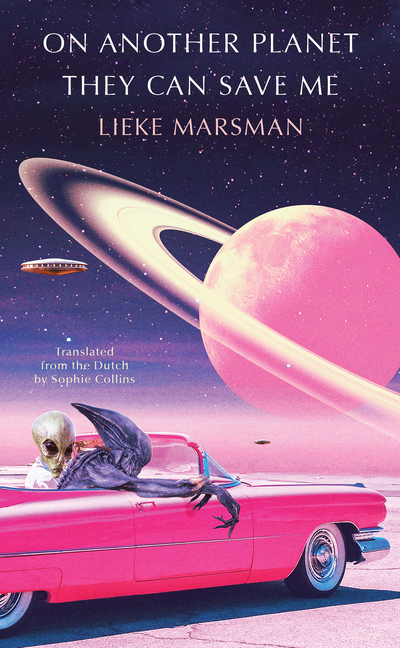
On Another Planet They Can Save Me

Lieke Marsman, trans. by Sophie Collins

This aching memoir from a late Dutch poet delves into the philosophical nature of faith, death, and the universe.
Cover Biography & Memoir

On Another Planet They Can Save Me

Lieke Marsman, trans. by Sophie Collins

Catapult | $26 | 9781646223541

A person who receives a terminal diagnosis has limited options, most of which boil down to continuing or ceasing medical care. Such choices are knotted with considerations such as health-care access, cost, and personal belief, along with society's expectations and level of tolerance for illness and death. The Dutch poet Lieke Marsman, who died at age 35 in 2026, tackles all of this and more with exceptional frankness in On Another Planet They Can Save Me, translated by Sophie Collins.

Marsman's philosophical memoir charts her intellectual, emotional, and spiritual response to a 2017 bone cancer diagnosis. In a collection of longer essays interspersed with shorter, dated journal entries, Marsman acknowledges that she has reached a juncture where the reality of her demise has pierced her long-held beliefs about god and the universe. She investigates other writers' and thinkers' works on faith, death, and even UFO sightings while living out the dissonance of wondering whether each experience will be her last: "I'm still afraid of all the moments leading up to it, when every action is the last time that action will take place. The last visit to the supermarket. The last blood test. The last cookie... the farewell to all the possibilities here."

As her remaining time unspools, Marsman shares the comfort of realizing how little humanity knows of the universe and its phenomena--distant galaxies and the divine. The result is an authentic and beautiful meditation on the universal and yet highly individual tragedy of death that leaves a powerful, lingering ache, delivering on Marsman's wish to be "a call to life." --Kristen Coates, editor and freelance reviewer

Cover Children's & YA

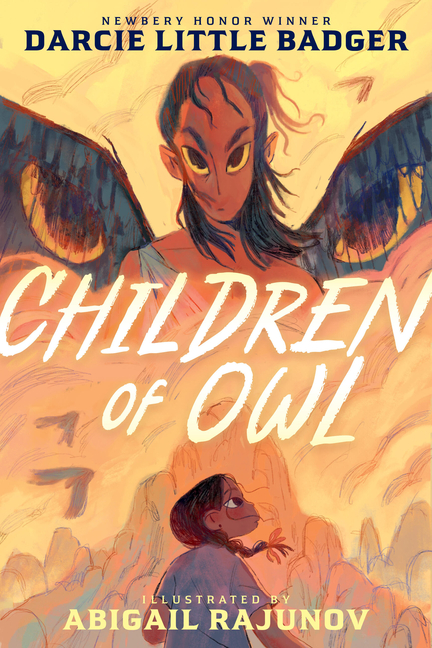
Children of Owl

Darcie Little Badger, illus. by Abigail Rajunov

Children of Owl, Darcie Little Badger's commanding work of YA genre fiction, is a dreamlike tale about trauma, family, and all that is owed to the dead.
Cover Children's & YA

Children of Owl

Darcie Little Badger, illus. by Abigail Rajunov

Levine Querido | $19.99 | 9781646145683

Children of Owl, the fourth solo novel for young readers from Newbery Honor-winning author Darcie Little Badger (A Snake Falls to Earth; Elatsoe) and illustrated by Abigail Rajunov (If I Lived in the Sky), is a fairy tale, a ghost story, and a striking narrative about trauma, community, and what is owed to the dead.

In a desert trailer park in Mockingtown, Tex., three Lipan Apache cousins battle with personal and real ghosts. Sixteen-year-old Maisie's grief over the death of her best friend, Mara, follows her like a specter; Joel becomes the unwitting guardian of a lost animal child disguised as a kitten; and Verona is haunted by the very literal ghost that her non-Native employers have unearthed by stealing from an ancient burial site. Hovering above them all is Owl, a spirit only Maisie can see. Owl's presence brought doom to Maisie's family's doorstep once before, and he has arrived with vague news of more to come. Maisie enlists her cousins to help her reverse the tides of fate, and she vows to make amends with whatever forces threaten their family.

Children of Owl is a commanding, dreamlike, and sophisticated piece of genre fiction rooted in Little Badger's Lipan Apache traditions and the wider well of fantasy. The novel's format fits the author's tone, alternating between third-person narration, diary entries, and comic book pages. Rajunov's illustrations provide atmosphere, her scratchy, broken line depicting emotive figures with giant eyes. Little Badger's ability to meticulously meld fantastical worlds with Indigenous traditions is what gives this speculative work its satisfying weight and makes it feel entirely, magically possible. --Mariel Fechik DesLaurier, librarian, freelance reviewer, music journalist

 Little, Brown Ink: Catstronauts: Module Mayhem (Catstronauts #8) by Drew Brockington
BOOK REVIEWS
An Amish mother and daughter wrestle with the ghosts of a violent act--and its forgiveness--as an outsider adds a perspective they must reckon with in this touching novel of life, loss, and love.

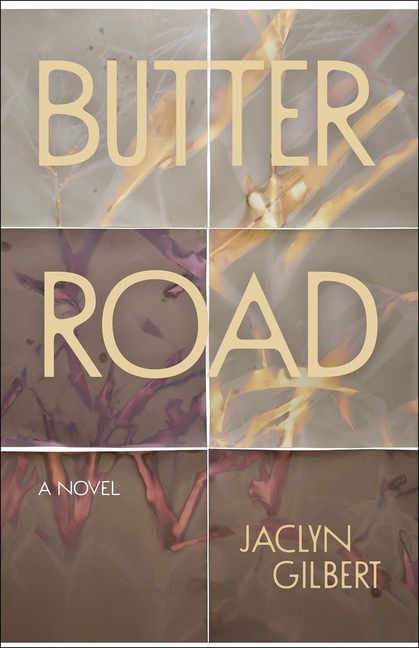
Butter Road

Jaclyn Gilbert

Acre Books | $22 | 9781968209063

The long tendrils of a shocking act in an Amish community tangle up the fates of three women 12 years later in Jaclyn Gilbert's powerful novel, Butter Road.

In 2006, a gunman shot 10 students at school in Lancaster County, Pa., before taking his own life. In 2018, the victims and their families are still haunted by the tragedy. Emma Walsh is an 18-year-old in her rumspringa year prone to panic attacks--a relic of the day she was shot and witnessed her older sister, Beth, killed. Ruth Walsh, her mother, buries her anger in baking, Bible reading, and caring for her son, who has a genetic disease. Sara Caldwell, the non-Amish wife of a doctor researching genetic disorders among the community, searches for purpose in her childless, gilded life.

Chapters alternate among the three. Emma's first-person viewpoint is raw and unflinching in its vulnerability: "Where was the sense in our wounds?" Sara recruits Emma for housework and gardening, and a new world of books and ideas teases a freedom Emma never dreamed of. Ruth, meanwhile, resents Sara's secular influences on Emma; she cannot lose another daughter. The narrative arc is straightforward and uncomplicated, but there are time jumps (from 2018 to 2019) that require close attention. With exquisite prose, Gilbert excavates the layers of grief and regret that accrete in lives touched by horrific loss. Told with profound sensitivity toward the Amish community, Butter Road is an indelible meditation on sorrow, second chances, and the courage to choose. --Peggy Kurkowski, book reviewer and copywriter in Denver

In Julie Orringer's wonderful third novel, the secrets between two literature professors and the adoption of a remarkable dog fuel an absorbing story of love, memory, and connection beyond words.

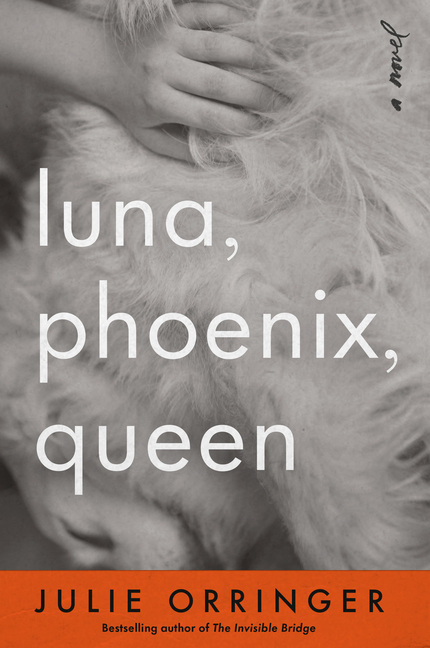
Luna, Phoenix, Queen

Julie Orringer

Knopf | $32 | 9798217207886

In Julie Orringer's extraordinary fourth book, Luna, Phoenix, Queen, dementia threatens the marriage and writing of two Midwestern academics, but familial and erotic bonds endure. And through it all threads one exceptional dog.

To call this a story of adultery and betrayal would sell it short. After literature professor Dava Pennington is diagnosed with early-onset Alzheimer's disease and moves into a nursing home, her husband, Barr, discovers a hidden manuscript in her study. It's a messy yet brilliant novel of the love between two women who direct a Maine women's shelter. Dava's mother's life story is instantly recognizable, but the text also confirms something Barr has long suspected: Dava's affair with her best friend and colleague, Svetlana White. He edits her handwritten draft of The Refuge, alters the style, tones down the lesbian sex, and publishes it as his own--to great acclaim.

Orringer's title incants the names borne by Barr's assistant Evie's rescue dog, who was badly burned in a house fire. As Luna, she's Barr's confessor; as Phoenix, she's Dava's therapy animal; as Queen, she symbolizes the pull of home, tacit communication, and the hope that memory might surpass words. The chapters range over several decades and as far afield as Dublin and Rome. They resemble linked stories; each is as intricate as a whole novel and reveals a fresh perspective and backstory, including Dava and Barr's sons and Svetlana's daughter. Orringer (The Flight Portfolio) is never less than stellar, and Luna, Phoenix, Queen--which calls to mind Amy Bloom and Meg Wolitzer--is unforgettable. --Rebecca Foster, freelance reviewer, proofreader, and blogger at Bookish Beck

Two archrivals come to their final showdown in the superpowered final novel of V.E. Schwab's trilogy about what endures in the face of death and beyond.

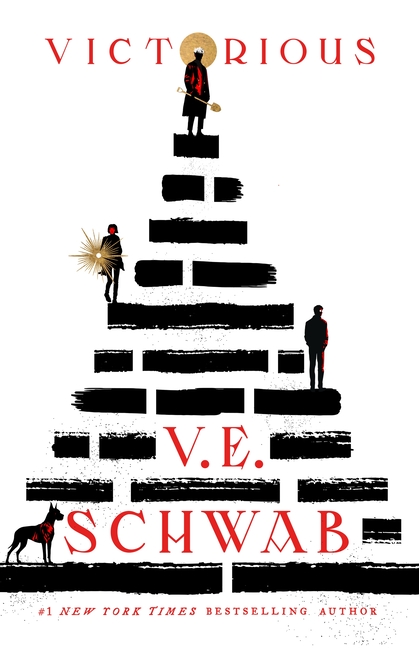
Victorious

V.E. Schwab

Tor Books | $31.99 | 9781250192233

In Victorious, the conclusion of the Villains trilogy by V.E. Schwab, the final resolution to the hostility between two lifelong friends turned nemeses emerges out of a struggle for the future of the superpowered world.

Years ago, Victor Vale and Eli Ever discovered they could induce superhuman abilities, turning themselves into "ExtraOrdinaries," or EOs. The fatal results of testing their theory on themselves ignited a decades-long clash that expanded throughout the EO community and attracted the attention of an agency that would imprison them all. Although only one of the two was at large at the close of Vengeful, the second volume, new EOs continue to upset the balance of power, and the alliances that rose around Victor and Eli grapple over who will be conquered and who will endure.

From the beginning of the trilogy in Vicious, Schwab (The Invisible Life of Addie LaRue; Bury Our Bones in the Midnight Soil) has built the bloody, beating heart of her conflict around the destructive but undeniable bond between Eli and Victor. They are in many ways two of a kind yet destined to oppose each other. Whereas Vengeful broadened the scope of the EO community, Victorious represents a return to form and a refocusing on themes of found family and love that twists into a horrible form. The superpowers make for a cinematic scale, but the trilogy finishes as it began: with the determination of the human soul to endure and connect. --Kristen Allen-Vogel, information services librarian at Dayton Metro Library

Author and history buff Lauren Willig's What Happens at Nightfall is a charming, twisty demon-hunting adventure-romance set in Brooklyn's Green-Wood Cemetery.

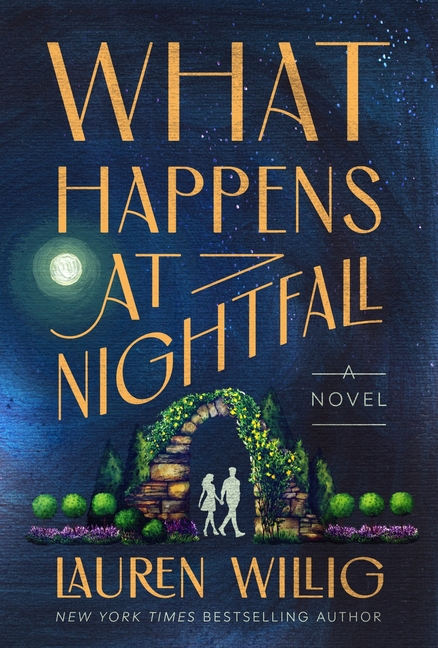
What Happens at Nightfall

Lauren Willig

Morrow | $30 | 9780063306172

Demonic trouble lurks in Brooklyn's Green-Wood Cemetery in Lauren Willig's fetchingly adventurous, historically informed paranormal romance set in 21st-century New York City. When Jess, an unmoored 37-year-old woman who is single and childless, reluctantly accompanies her best friend, a well-known author who's married with four children, on an evening cemetery tour, dark mischief ensues. Jess ends up on the gothic doorstep of the cemetery's arborist, Adam, a 40-year-old, good-natured, attractive, widowed father of two. Adam lives in a historic mansion on the cemetery grounds and is more fascinated by trees than the surrounding statuary. Former start-up CFO Jess may live in "a swanky modern high-rise," but is soon contending with a Gilded Age curse that connects her ancestry with that of Adam's wife, who was from an old Dutch New York family. Jess and Adam team up to rid themselves of a havoc-causing, murderous demon while romantic friction brews.

What Happens at Nightfall is a slight departure from Willig's usual historical fiction, with its spiritual turns, but Willig's signature warmhearted humor and cleverly incorporated research are happily still present. For instance, the demon is drawn from a Niccolò Machiavelli short story, but here it possesses a Cookie Monster stuffie (among other objects and people) and occasionally helps out with Latin homework. Willig (Band of Sisters; The Girl from Greenwich Street) plays with gendered assumptions, upending them to wonderful effect. --Nina Semczuk, writer, editor, and illustrator

Tommy Nelson: My Voice Is a Beat by Kevin Olusola, illustrated by DeAndra Hodge
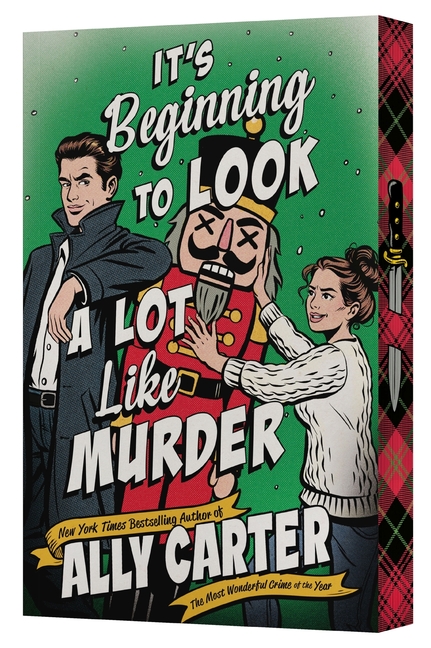
A capable housekeeper's daughter and her rich-boy frenemy join forces to unmask a killer in Ally Carter's witty second holiday-themed mystery.

It's Beginning to Look a Lot Like Murder

Ally Carter

Avon | $18.99 | 9780063387041

Ally Carter's witty second holiday-themed mystery, It's Beginning to Look a Lot Like Murder, reunites a housekeeper's hardworking daughter with the rich boy who was her childhood playmate and frenemy and is now the target of a cold-blooded killer.

Ella Chambers has spent her entire life working: first assisting her mother, Mallory, in her duties for the wealthy Montgomery family, then doing thankless jobs for everyone in her small town. When Liam, heir to the Montgomery fortune, returns home for Christmas after his grandfather Trip's death, it becomes apparent that someone is trying to eliminate him--and thus get their hands on both his money and the rights to develop the family's valuable mountain property. As a massive blizzard approaches, Ella and Liam join forces to find the would-be killer, survive the holiday, and (maybe) address their unresolved history together.

Carter (The Most Wonderful Crime of the Year) writes sensitively of Ella's challenges, including constant belittlement from Liam's family and her struggle to pay off her mother's medical debts since Mallory's death from cancer. After leaving as teens, neither Liam nor Ella expected to return to their insular town, which is thoroughly dominated by Liam's family and their snobby associates. But as they investigate suspicious circumstances surrounding Trip's death and Liam's attempted murder, they dig up a lot more than old holiday decorations--a highly inconvenient mutual attraction, for example. With a fast-paced plot, plenty of witty banter, and holiday-themed hijinks, Carter's mystery will entertain those who like their romance (and their murder) with a side of eggnog. --Katie Noah Gibson, blogger at Cakes, Tea and Dreams

Cover Biography & Memoir
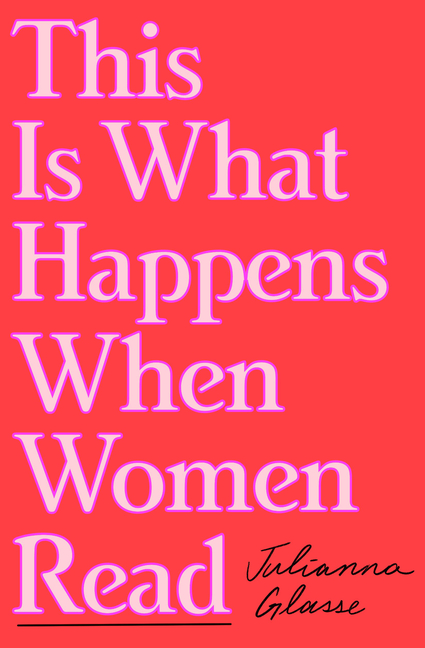
In her inspiring memoir, an evangelical Christian singer recounts how she rejected the marriage and church that deemed reading "heretical" and founded a global nonprofit to support women's liberation.
Cover Biography & Memoir

This Is What Happens When Women Read

Julianna Glasse

Spiegel & Grau | $29 | 9781966302346

When Julianna Glasse's now ex-husband discovered her beloved books and accused her of heresy, neither of them imagined that one day she'd adapt his scornful declaration of "this is what happens when you read!" for both her memoir's title and the name of her global nonprofit organization that promotes "the liberation of women through education and literature."

This Is What Happens When Women Read details Glasse's challenging path from a childhood based in evangelical Christianity, through a marriage of "dutiful submission," and into a role as the leader of a global foundation committed to helping women escape oppression. As a wife, she was half of a well-known power couple, a popular Christian-pop singer married to a major-league baseball player. She prayed to save her marriage but simultaneously realized that as she "spread the Word," she was discouraging the women she wanted to help liberate. Her husband's scorn for her books was the catalyst for action. After a vitriolic divorce, she descended into self-loathing and began drinking alcohol, but eventually she immersed herself "in books instead of booze."

Glasse describes her quest to be her "own guiding light" and cites the many works she absorbed, including Dante's Inferno, the Bhagavad Gita, Clarissa Pinkola Estés's Women Who Run with the Wolves, and Rebecca Solnit's Men Explain Things to Me. She embraced new experiences, achieved spiritual and sexual autonomy, earned a degree from the University of Oxford, and parented her three children. As CEO of her foundation, Glasse presents her memoir, This Is What Happens When Women Read, as an inspiring reminder of her belief that "we read to free ourselves." --Cheryl McKeon, Book House, Albany, N.Y.

Cover Travel Literature
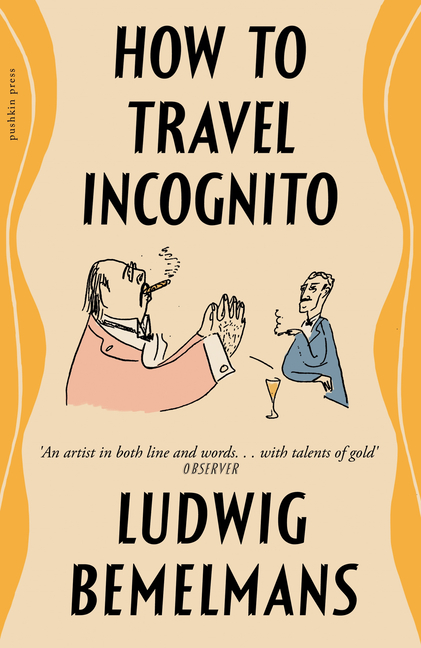
This fictionalized, satirical memoir from the creator of the beloved children's book Madeline recounts his adventures with an eccentric nobleman on their road trip from Paris to Cannes.
Cover Travel Literature

How to Travel Incognito

Ludwig Bemelmans

Pushkin Press | $17.95 | 9781805680260

How to Travel Incognito by Ludwig Bemelmans is a social drama steeped in an aura of faded French grandeur. From the creator of the beloved Madeline series for children, the work takes the form of a fictionalized, satirical memoir recounting the author's madcap adventures accompanying an eccentric Parisian nobleman on a road trip from Paris to Cannes in 1950s France.

Bemelmans first encounters the tall, lanky Count of St. Cucuface in the first-class compartment of a Paris-bound train. St. Cucuface is a charming, penniless aristocrat who subsists on cocktail-party fare and is known around town as one of the "authentic antiques of France." What the count lacks in money he makes up for in imagination and savoir faire. When the two experience difficulty with a dining reservation, St. Cucuface suggests that Bemelmans pose as "Prince de Bavière." Suddenly, all manner of doors fly open for them: restaurant table upgrades, lavish complimentary meals, and royalty discounts at the best hotel in Paris.

Embracing his new royal persona, Bemelmans mingles easily with foreign dignitaries, including the heavily bejeweled "Maharajah of Bengal-Something-or-other" and the jovial Madame l'Ambassadrice, wife of the U.S. ambassador. A cameo by the Duke of Windsor is cleverly tucked into a scene on the French Riviera. As his whimsical illustrations prove, Bemelmans is a keen observer of the leisure class making mischief.

Originally published in 1952, How to Travel Incognito is a nostalgic throwback to a post-World War II "time of plenty," a story the author crafted to "cheer up the sorry world." --Shahina Piyarali

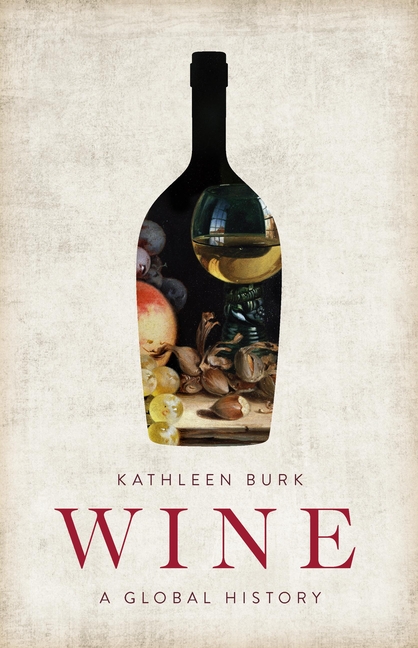
From ancient amphorae to temperature-controlled cellars, Wine: A Global History excavates the layers of human civilization through a single, intoxicating lens.
Cover Food & Wine

Wine: A Global History

Kathleen Burk

Basic Books | $40 | 9781541604605

Kathleen Burke excavates the layers of civilization through a single, intoxicating lens. Wine: A Global History is an account of viticulture and fermentation as well as an exhaustive, breathtaking exploration of how deeply human culture is steeped in libation, proving that to understand wine is to understand the architecture of society, commerce, and art.

Burke, professor emerita of modern and contemporary history at University College London, traces wine's evolution from its accidental discovery in Neolithic clay jars through historical medicinal applications, and up to complex 21st-century global supply chains. She maps ancient trade routes across the Mediterranean, details the economic mechanics of monastic vineyards during the Middle Ages, and examines the political intrigues surrounding royal cellars. She explains how ancient Greeks and Romans routinely mixed their wine with seawater, lead acetate, or resin not merely for flavor but also as a method of preservation before temperature-control technology.

Burke uncovers the surprising role played by the Catholic Church as the primary steward of agricultural science during the chaos that followed the collapse of the Roman Empire; the church preserved grape clones through centuries of turmoil. She explores how the 19th-century phylloxera epidemic completely restructured the geopolitical and economic landscape of European agriculture, forcing nations to reinvent their industries from the root up.

Wine's central thesis is that culture is utterly and inextricably wine soaked. Burke illustrates how rituals, laws, and even spatial architectures, from the design of amphorae to the layout of modern vineyards, have been fundamentally shaped by humanity's enduring relationship with this beverage. --Elizabeth DeNoma, executive editor, DeNoma Literary Services, Seattle, Wash.

Cover Children's & YA
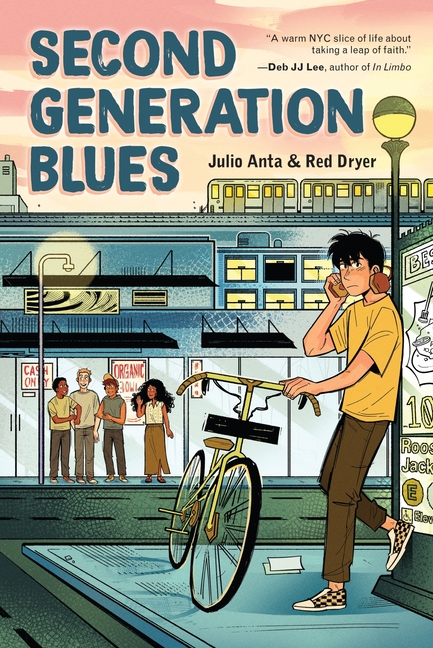
A high school student spends his summer trying to satisfy his immigrant parents while chasing his dreams to become a music journalist in this tense, convention-defying graphic bildungsroman.
Cover Children's & YA

Second Generation Blues

Julio Anta, illus. by Red Dryer

HarperAlley | $18.99 | 9780063222335

The prickly, poignant, slice-of-life YA graphic novel Second Generation Blues depicts the collision of immigrant parents' expectations with their U.S.-born son's big dreams.     

It's summer in New York City and teen Luis Menendez would love nothing more than to spend it going to concerts, reviewing them, and working toward his goal of being a music journalist. Instead, he's stuck working at his family's Cuban restaurant, taking commands from his militant and borderline-cruel father, Manny. Luis cheers up when he meets Yara, a sympathetic customer from a wealthy family, and one of his reviews catches the attention of a local music blog. Manny, however, believes both Luis's music writing and Yara are distractions and excuses for Luis to not contribute to the restaurant: "I didn't dream of a life in America just so I could raise a lazy child who doesn't know the value of sacrifice," he says.  Luis, with his own hopes and dreams on the line, must navigate his responsibilities to his parents and himself.     

Eisner Award nominee Julio Anta (Frontera) effectively turns up the tension to an almost uncomfortable degree in this convention-defying family graphic novel. The combination of Anta's precise writing and debut illustrator Red Dryer's emotive art makes palpable the anxiety of the titular second-generation blues. Dryer builds pressure into stressful moments by thickening the panels' black outline and adding inky splashes of black dread to the white space surrounding the image. Fans of Rex Ogle's sensitive, catharsis-driven YA novels will find similar satisfaction in Anta's exploration of life as a child of immigrants. --Luis Rendon, freelance reviewer

Cover Children's & YA
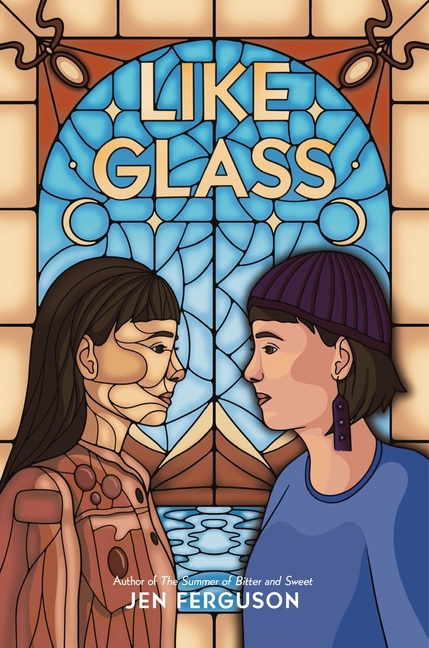
A Métis teen travels to the town where her sister died and where her father now lives to understand them both in this genuine and chaotically adventurous YA exploration of grief and personhood.
Cover Children's & YA

Like Glass

Jen Ferguson

Heartdrum | $19.99 | 9780063334274

Like Glass, by YA author and William C. Morris and Stonewall Award Honor winner Jen Ferguson (The Summer of Bitter and Sweet; A Constellation of Minor Bears), paints a passionate portrait of grief through a Métis teen's captivating, chaotic determination to understand her sister's death and why her father refuses to leave the place where it happened.

One year ago, Tate's older sister, Bronwyn, died of an aneurysm while living in a small town in the French Alps. Tate's Métis father and "white settler" mother left Toronto to bring Bronwyn's body home, but only Tate's mother came back. Now, the 16-year-old arrives in Chamonix with one goal: convincing her father to leave this snowy place. While there, Tate meets queer American ski jump athlete Agatha, who makes her heart beat like "a drum in a circle of other drums."

Ferguson precisely encapsulates the desolation of a tragic loss and the desperation to understand it. There is no fantasy here, but there is a familiar and near-mystic entropy in the foreboding undercurrent that Tate feels among the people who knew her sister and the places where she lived and died. Ferguson also adroitly depicts an eggshell-lined path to mending between an imperfect yet loving father and the only daughter he has left. She seamlessly folds racism into Tate's interactions with locals and plants a satisfying queer romance in stuck elevators, heart-stopping break-in missions, and a stealth road trip. Tate, who cuts the collars from her shirts and isn't a hugger, is a fully realized teen who acknowledges that "personhood is hard" in this deeply felt novel about sorrow and reconciliation. --Samantha Zaboski, freelance editor and reviewer

Cover Children's & YA
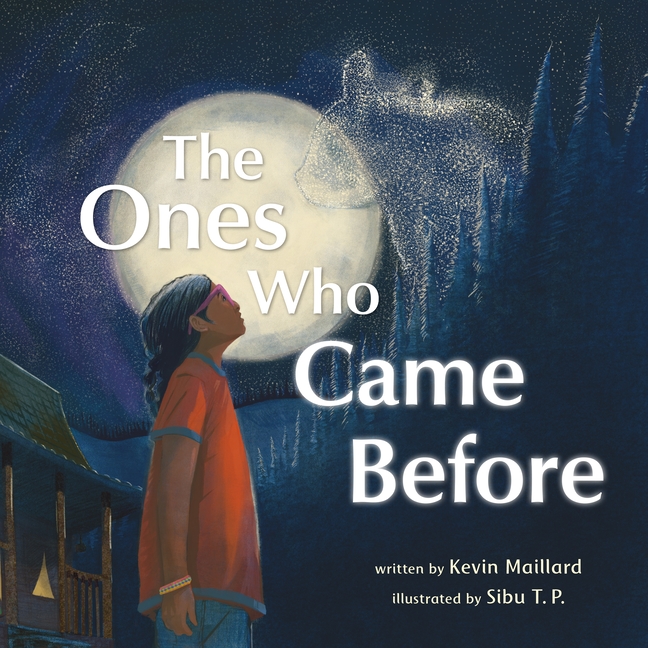
A city girl tries to understand how she belongs while at her grandfather's country home in this astutely written, exquisitely illustrated picture book.
Cover Children's & YA

The Ones Who Came Before

Kevin Maillard, illus. by Sibu T.P.

Roaring Brook Press | $19.99 | 9781250821966

Robert F. Sibert Informational Book Medal winner Kevin Maillard (Fry Bread; And They Walk On) tenderly explores belonging in the picture book The Ones Who Came Before. The lively artwork of Sibu T.P. (Home, Home) accompanies Maillard's melodic prose, producing a thoughtful collaboration that encourages young readers to consider the legacy of the land on which they live.

Maillard's protagonist, Aabanya, visits her grandfather, Big Jimmy, every summer "at his cottage on Early Mountain." Despite the joy she feels with her grandfather, she is still very much "a city child in a country place." Aabanya helps Big Jimmy with his garden and begins to "bloom... under the warmth of the sun." At night, he tells her stories of the mountain and the Earlies, the people who "were here before the town": "We sang the music of life and danced the rhythm of freedom in the village at the end of the road." When Aabanya unexpectedly encounters a curious bear, Big Jimmy gently calms her fear. "Why is it here?" he asks. Remembering his words, Aabanya realizes the bear and its kin "are the ones who came before" even the Earlies.

T.P.'s graphite pencil and acrylic illustrations are an excellent match for the text's themes. His distinct shadows and spills of light create an atmosphere that conveys a comfort with the unknown; his use of reflection emphasizes the ideas of naming and belonging, such as when a crowd of Earlies are mirrored in Aabanya's glasses. Deeply saturated colors make every page of the stunning, compassionate The Ones Who Came Before a visual enchantment. --Jen Forbus, freelancer

Cover Children's & YA
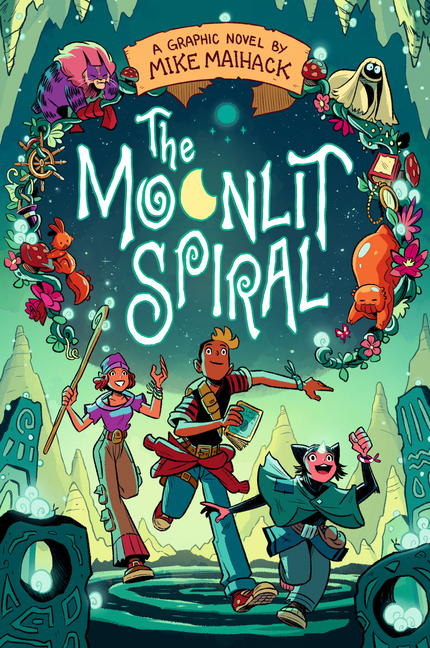
This adventurous, eccentric middle-grade graphic novel follows a group of young treasure hunters on a quest through an elaborate, whimsical fantasy realm.
Cover Children's & YA

The Moonlit Spiral

Mike Maihack

Candlewick | $14.99 | 9781536224504

A young explorer and his friends search for a long-lost treasure in the boisterous, bouncy middle-grade graphic novel The Moonlit Spiral by Mike Maihack (Cleopatra in Space series).

In the land of Helix, "treasure hunting was once a way of life." Explorers "unearthed the artifacts of past civilizations," and magical creatures known as guardians protected "treasure and sacred places." Then the guardians disappeared. Years later, Orion Flynn, the most famous treasure hunter in Helix, also vanished after venturing out to find a "final, mysterious discovery." And thus the "great era of exploration" came to an end.

Punky blond-haired, brown-skinned Orion "Rion" Corsair grew up hearing stories about his namesake from his treasure-hunter parents. Rion lost interest in exploration and the possibility of magic after his parents died searching for Flynn's treasure. However, when his parents' old journal reveals clues hidden on previously empty pages, Rion is burdened with new information about Flynn's lost treasure. He sets out with two friends to travel "in the same footsteps of Orion Flynn and [Rion's] parents," solving puzzles, fighting beasts, and rediscovering magic.

The Moonlit Spiral is a zany, earnest story of adventure and friendship set in an elaborate, whimsical fantasy world filled with creatively imagined fauna. Maihack's eye-popping illustrations brim with color and detail as Rion and his companions trek through mountainous cities, verdant jungles, and spiny caverns. Although some of the novel's plotlines become muddled, the focus on the trio's evolving friendships shines bright. Fans of detailed world-building and offbeat humor should enjoy this inventive romp. --Alanna Felton, freelance reviewer

The Writer's Life

Kristen Millares Young is a journalist and author of the novel Subduction. In her new memoir, Desire Lines, she recounts her discovery of a ferocious ancient Roman mother goddess named Cybele and explores the remarkable parallels between her life and Cybele's mythical portrayal. In this conversation, she considers the value in challenging powerful, coercive narratives while retaining a willingness to be astonished.

The Writer's Life

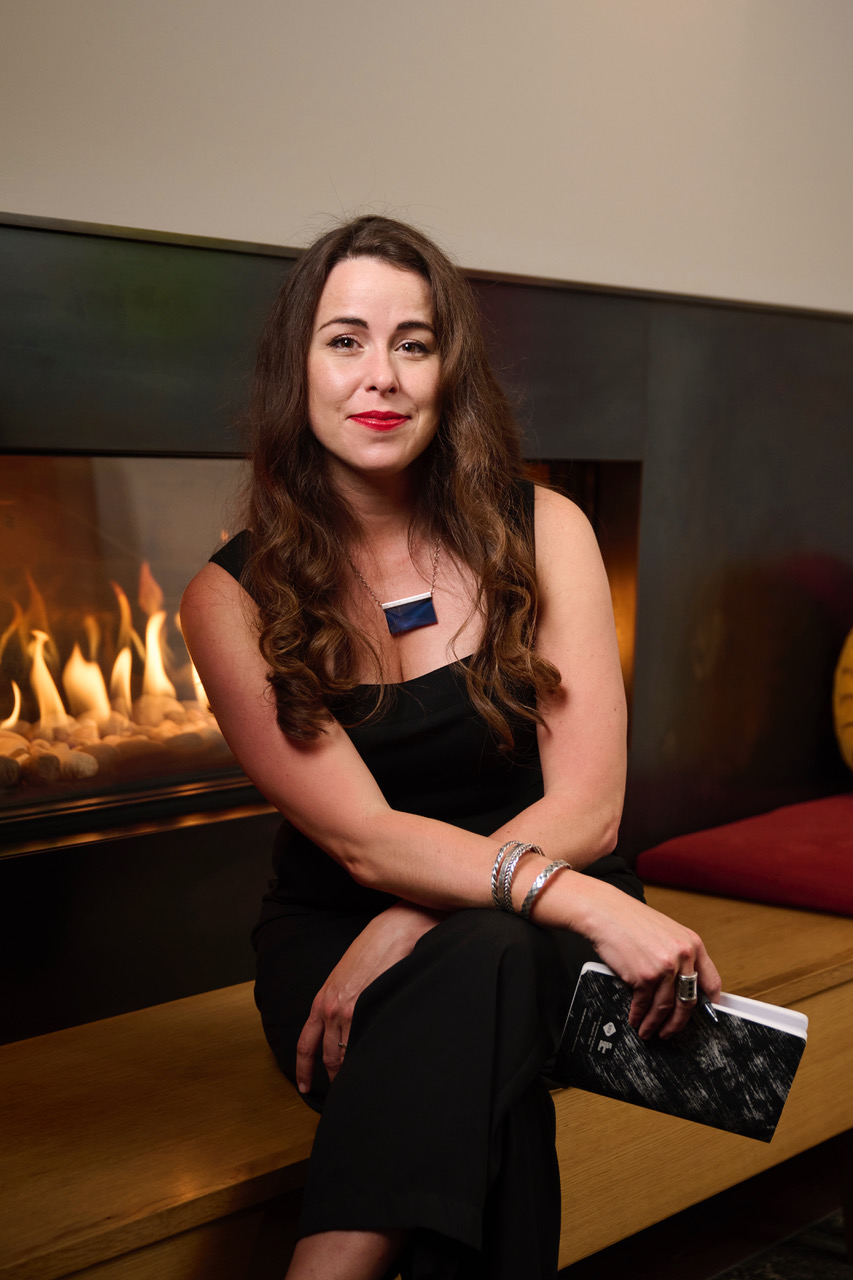
Kristen Millares Young: A Willingness to Be Astonished

Kristen Millares Young

(photo: Chona Kasinger)

Kristen Millares Young is a Seattle-based journalist and novelist whose acclaimed debut novel, Subduction, won the Independent Publisher Book Award. Her work has appeared in the Washington Post, the New York Times, the Guardian, Literary Hub, and the Rumpus, and in the anthologies Latina Outsiders and Alone Together, winner of the 2021 Washington State Book Award. In Young's memoir, Desire Lines (Red Hen Press; reviewed in this issue), she recounts her discovery of a ferocious and powerful ancient Roman mother goddess named Cybele and explores the remarkable parallels between her life and Cybele's mythical portrayal.

Tell us about the process of completing this intensely personal project.

It was one of the most arduous journeys I have ever taken. If I had known that I was going to write a memoir, I would not have become a writer. It goes against everything that was instilled in me to actually vocalize the truth of my life. The truths of women's lives have been suppressed for millennia in order to retain an image for a family structure, a patriarchal structure, or societal structure. Women are supposed to act as publicists for our families and the institutions to which we are attached, whether or not we have been served by them. So just making the decision to tell this story was very difficult.

I just finished narrating the audiobook and recently completed a Spanish-language translation with Majel Reyes Quesada, a seven-month collaboration. Each time I go through the manuscript, it is a deep emotional investment, a commitment to myself. It's taxing, frankly. I am glad to hear you say that the pacing of revelation and the emotional cadence allowed you to move through the text with ease. Because, of course, the worry is that the pain will drive someone away. But there is a lot of joy in the book, too, and that's the truth of my life.

The process of writing the book brought me peace. I feel much more peace than when I began. With each revision I had to feel it, again and again and again. I go through a lot of drafts, I'm like the sea tumbling that rock forever!
What impact did your writing of Desire Lines have on your family?

I am estranged from my parents. The process had already begun as I became a mother, with another reckoning over the facts of my childhood--coming to understand how deeply flawed the logic had been when applying frameworks to decision-making regarding my life and safety. My parents are just not willing to have any kind of conversation about it. Rather than valuing my presence in their lives or the presence of my children, they would rather have a sanitized version of who they are and who they have been to me.

I know there are a lot of people who sustain relationships with authority figures or former authority figures who require silence as a condition of belonging, but I found it too great a strain to remain in relation to that falsity. I don't feel safe with them around my children, in part because I know they really need to insist on this counter-narrative, which is essentially that my socioeconomic privilege rendered all others harms to my being as moot.

I am deeply grateful for the education I received, and I value many of the things that they taught me, but at some point I had to make a decision whether I was willing to accept that erasure in order to belong. I decided it felt too much like self-abandonment for me to allow it. I simply won't allow myself to be treated badly. As a woman, once you make the decision that you won't accept ill treatment, it really clarifies a lot of paths.

How do you navigate your socioeconomic privilege?

Privilege is about obligation. If you have privilege, then you have an obligation to put it to work. As a reporter and book critic, I have spent several decades trying to give voice to peoples who have been underserved, marginalized communities, BIPOC writers and women who have been hurt by people around them, and environments which have been degraded by disregard. It's not a lucrative career, yet it's one where, when I look back, I'll say that my heart was in the right place. I was not just pursuing profits or accolades. I was doing deeper work that is meaningful. When you are deliberately not aligning yourself with the most powerful, then you become an existential threat. You have shown that there is no amount of coercion that can co-opt your engagement. Those kinds of women are very dangerous.

Where does Cybele, the mother goddess in your memoir, fit into your life?

What Cybele did for me as a thinker was show me how much astonishment still remains beneath the facts of what I thought I knew. It encourages me not to accept the easy narrative, the easy read of something.

Virgin worship in my family is very real. The Virgin Mary was everywhere. My abuela painted her so many times. In some ways, I wish I had known as a girl that there was Cybele, this powerful, ferocious figure beneath the Virgin Mary, that was the animating force for the icon, but I am open to being surprised. I want to stay curious about the world. It's very easy at this time in our history to close off because there's so much bad news coming in, and yet the world is wondrous. If I can continue to find astonishment, then I am happy to get old.

There are many thinkers, like Clarissa Pinkola Estés, for example, who as a Jungian analyst has always looked for the symbology beneath patriarchal tellings of fables. It's comforting to know that these truths endure, even though it can also be disconcerting to realize how sustained the effort has been to erase women's sexuality, our power, our intellect, our contributions.

I am not a religious person, but I do understand religion as the human art of answering mystery. So, to realize that there is still so much dark matter in what I thought was a known universe, it's actually encouraging. I will say that the reckoning with centuries and millennia of patriarchal oppression can get a bit heavy. But you find these other thinkers, and they are like beacons on this journey. There's this warmth and light there, and it makes all the cold and the darkness worthwhile--the lift of your heart when you meet another mind like that. --Shahina Piyarali


Book Candy
Rediscover

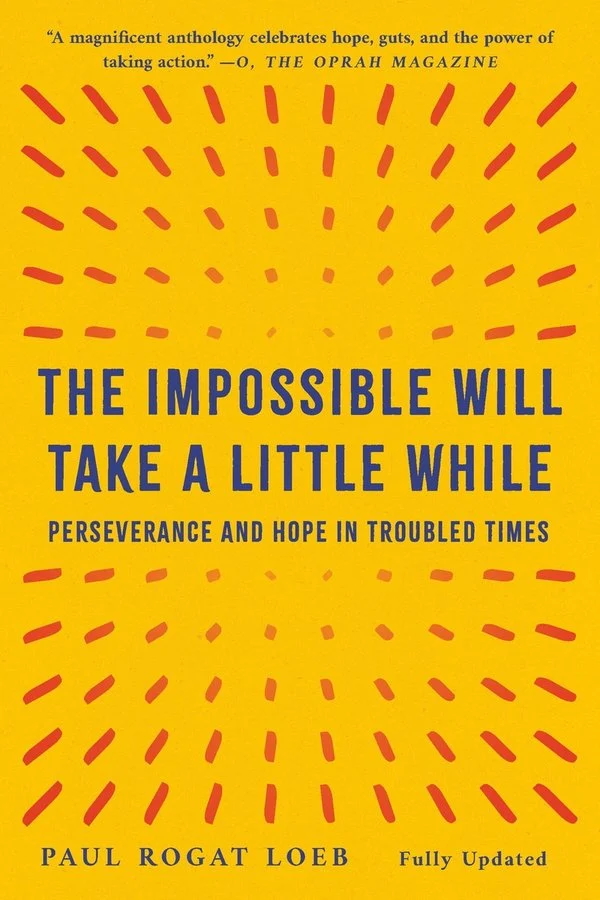
Between political instability, war, climate change, oppression, genocide, pandemics, and myriad other problems, hope is in short supply these days. But sometimes, as evidenced in Paul Rogat Loeb's anthology, The Impossible Will Take a Little While: Perseverance and Hope in Troubled Times, normal people can overcome seemingly impossible odds to enact positive change. Loeb's book explores what it was like to confront South African apartheid, the 2024 coup attempt in South Korea

Rediscover

Rediscover: The Impossible Will Take a Little While

Between political instability, war, climate change, oppression, genocide, pandemics, and myriad other problems, hope is in short supply these days. But sometimes, as evidenced in Paul Rogat Loeb's anthology, The Impossible Will Take a Little While: Perseverance and Hope in Troubled Times, normal people can overcome seemingly impossible odds to enact positive change. Loeb's book explores what it was like to confront South African apartheid, the 2024 coup attempt in South Korea, Putin's prisons, dictatorships in Eastern Europe under Communism, climate change defeatism, American slavery, robber barons of the past and present, and attacks on American democracy, including how Norwegian resistance to the Nazis helped inspire Minnesota's ICE resistance. Contributors include Nelson Mandela, Alexei Navalny, Bill McKibben, Diane Ackerman, Jesmyn Ward, Howard Zinn, Heather Cox Richardson, Alice Walker, Sherman Alexie, Vaclav Havel, Paul Hawken, Rutger Bregman, Bill Moyers, Audre Lorde, Mary Pipher, Tony Kushner, Maya Angelou, Pablo Neruda, Terry Tempest Williams, Desmond Tutu and 52 others, as well as essays by Loeb himself.

First published in 2004, an updated version of The Impossible Will Take a Little While was released by Basic Books on October 13, 2026, with 125,000 copies in print. The original version spent 11 weeks on the independent bookstore bestseller list and won the Nautilus Award for the best social change book of its year. Loeb is also the author of Soul of a Citizen: Living with Conviction in Challenging Times, which has 175,000 copies in print and has been taught in hundreds of college classes. Loeb is a prolific public speaker, media figure, and political activist. In 2008, he founded the Campus Election Engagement Project, which helped millions of college students register to vote and volunteer with campaigns.

PICK OF THE WEEK

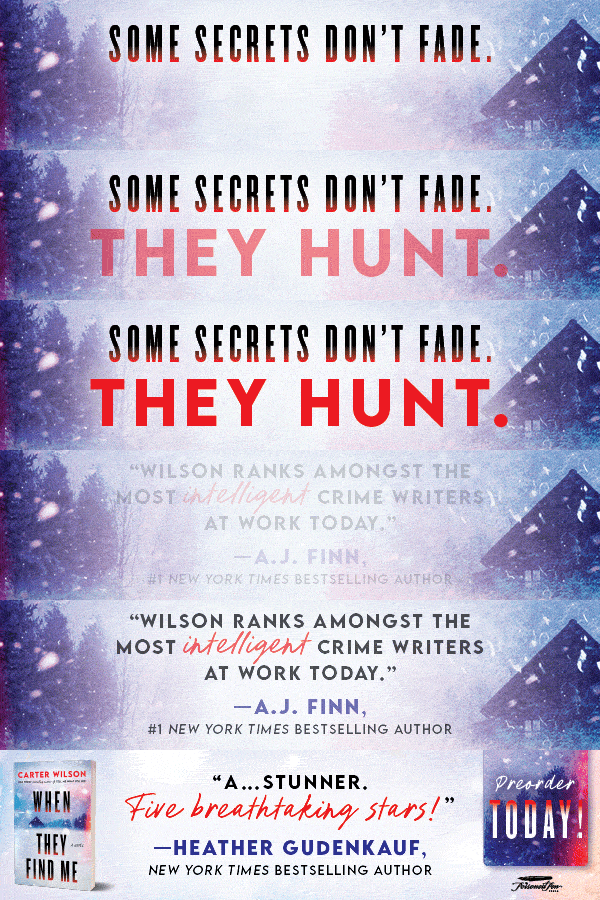
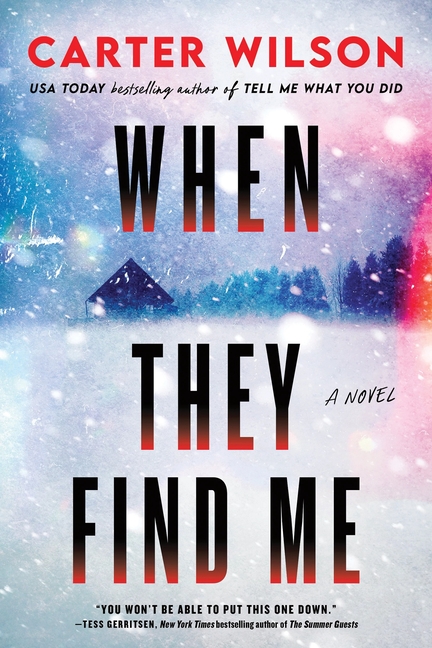
When They Find Me

by Carter Wilson

Carter Wilson's 11th novel, When They Find Me, is a super-charged thriller about family ties, the legacy of trauma, and the tension between morality and survival. The story opens with an immediate adrenaline hit: "The old man says this is where our target is hiding. Somewhere in this little town. Expanse, Colorado." A young woman named Riven has just arrived in the cold and snow, traveling in a beat-up old RV with Boone, her brother, and their father, who calls himself Coyote. Boone and Coyote have both killed before, but their task in Expanse is to set up Riven's first kill. The target is the man Coyote maintains ruined their lives, years ago, when they lived in Idaho--"Back when we were domesticated. Fed on routines. Sleeping in real beds. No blood on our hands, no need for constant vigilance."

Also in Expanse, Annie Wolfe and her 12-year-old daughter, Coral, live away from mainstream society, offline and in hiding. Annie fears those who may be hunting them from a past life.

PICK OF THE WEEK

When They Find Me

by Carter Wilson

Carter Wilson's 11th novel, When They Find Me, is a super-charged thriller about family ties, the legacy of trauma, and the tension between morality and survival. The story opens with an immediate adrenaline hit: "The old man says this is where our target is hiding. Somewhere in this little town. Expanse, Colorado." A young woman named Riven has just arrived in the cold and snow, traveling in a beat-up old RV with Boone, her brother, and their father, who calls himself Coyote. Boone and Coyote have both killed before, but their task in Expanse is to set up Riven's first kill. The target is the man Coyote maintains ruined their lives, years ago, when they lived in Idaho--"Back when we were domesticated. Fed on routines. Sleeping in real beds. No blood on our hands, no need for constant vigilance."

Also in Expanse, Annie Wolfe and her 12-year-old daughter, Coral, live away from mainstream society, offline and in hiding. They keep go-bags and weapons at the ready. They've equipped their home with a secret underground bunker. They have Harley, "the least ass-kicking dog" Annie has ever known, but she's good at alerting. Annie fears those who may be hunting them from a past life.

On December 23, as a potentially record-breaking snowstorm descends, Riven enters what she believes to be the house of her intended target. Instead, she finds Annie. This random accident--a simple mistaken address--sets off a chain of events that will change their lives forever.

The odds of these two armed parties stumbling upon each other may seem unlikely, but Expanse is a special place. "No one in this town discusses real names," and everyone seems to be hiding from something. Riven's intended victim had hoped to outrun the past that brings Coyote to Colorado. Annie, his neighbor, is on the run from something else: her own old trauma, the loss of her husband, and irrevocable damage to herself and to Coral.

After their initial confrontation, Riven and Annie are joined by Coyote and Boone in Annie's home, and they settle into their closed, snowbound environment. The three home invaders stand opposed to Annie and her dog, Harley; Coral is hidden away, hopefully in safety. Hours pass. Weapons are aimed, questions asked. The strain increases steadily as both physical and psychological threats multiply. Coyote came for revenge but insists his "pack" stay and seek a twisted "truth." Truth is a shifting target, however, for these men and women variously hunted or hunting.

Wilson's two narrators are flawed but sympathetic, with redemption seeming to hover just over the horizon. Riven in particular seems poised on the edge of a major change: "And here I remain, the one with all the power. The power to choose. The power to kill. The choice of being an animal or human." This will-she-or-won't-she charge contributes to the general unease.

Alternating chapters are told from the two women's first-person perspectives and move between the present setting--December in Expanse--and earlier times. In those flashbacks, readers slowly put together the past ordeals of the present-day antagonists. Annie, under a previous name, was married and lived in Miami. After the events leading to her husband's murder, she barely escaped with Coral to make a new life. "All women have my kind of fury," she posits. "All that's needed is the trigger to unleash it."

Riven, like Coral, witnessed terrible things as a child. Through her eyes, readers watch Coyote's mental health deteriorate. He commands his children to stop calling him father. He calls his family a pack, says they're on migration, demands they live by his version of an animal code: survival without sentiment. (As an Easter egg for returning fans, Coyote has named himself after a character in Wilson's third novel, Revelation.) Coyote is entirely lost in his fantasies, but Riven remains ambivalent, closely watching her beloved brother Boone, wondering if there is any shred left of "the kid who used to sneak me extra food, who still stands a little closer to me when the old man's voice sharpens. He's straddling some line I can't pull him off of. Half in the dark, half reaching for the light."

The circumscribed setting in a secluded, snowed-in, modest home, and the expansive interior worlds of the various parties, offer a remarkable contrast. Despite spanning only a handful of hours in the present, tightly defined space, When They Find Me journeys to past timelines, memories and fantasies without sacrificing its fast pace. Riven grapples with taking agency in her own life, questioning what she remembers and who she wants to emulate. Annie's past losses and old enemies remain ever-present for her, as she worries for Coral and avoids the ghosts she's not ready to face. This chilling novel of suspense is accompanied by occasional pencil-shaded sketches, illustrating scenes. Each holds a hidden element that contributes to the immersive effect and sense of mystery. Taut pressure, high stakes, and compelling characters combine in this unnerving thriller from an experienced writer. --Julia Kastner

Poisoned Pen Press, $18.99, paperback, 432p., 9781464272684
Click here to read our interview with Carter Wilson

PICK OF THE WEEK

Carter Wilson: Small Casts and Huge Consequences

Carter Wilson
(Elke Hope Photography)

Carter Wilson is known for domestic and psychological thrillers, including Final Crossing, The Boy in the Woods, Mister Tender's Girl, and Tell Me What You Did. He is the creator and host of the podcast Making It Up, and the founder of Unbound Writer, where he works with writers through coaching, retreats, and online classes. Wilson was born in New Mexico, grew up in Los Angeles, and attended Cornell University in Ithaca, N.Y. He lives with his family in Erie, Colo. His 11th novel, When They Find Me, is a tense, electric thriller featuring random accidents, family bonds, and the legacies of old wounds, set in snowbound rural Colorado. It will be published by Poisoned Pen Press on November 10, 2026.

What's different about writing your 11th book from your first one?

Not much. It gets easier in terms of the physicality of writing, just constructing sentences. My first novel was like hand-to-hand combat. Now, if I know what I'm doing in terms of a scene, it just flows. I produce faster.

The struggles are the beauty. I don't outline, so I have no idea where the story is going, and so in every book I have the same pain point: Is this any good? Is there an ending here? Does this make sense? But the flip side of that is I get to sit down every day and say, what happens? And I get to find out. I can't imagine ever not doing that.

Over time, you develop a sense of story that just soaks into your subconscious. I'll have a sense that nobody's moving around enough, we need action, or we need an emotional break, or a pause. When you first start out, all you have is the experience of reading other people's books. Once you write enough, you have a sense of your own cadence and rhythm, and it continuously evolves, and that's kind of beautiful too. Your voice changes.

Is it difficult to switch between two voices?

That's a real challenge. I don't do it a lot; most of my books are single point of view, first-person present tense, and this one is a dual POV, with each having more or less equal weight. Having them sound distinct is really tough. I asked Tess Gerritson this same question and she said she considers their economic background. That's really interesting. In the case of this book, one of the voices is fairly uneducated, young, home-schooled, and I think I was able to adopt a sound from that.

There's a trap that thriller writers, including myself, get into. First-person present tense is so interior, it's so immediate, that you can go down a path where you're inside somebody's head without them actually doing anything for a long time. It becomes a shortcut to reveal backstory or intention. That's my first draft. Next draft, I cut a lot of that out--how do I show this in an interesting way? The beauty and the work are all in the editing.

Are there special challenges in writing from darkness?

I usually don't write from the antagonist's point of view. Typically it's the protagonist, and their inference and their filtering of their relationship with the antagonist. I write from a place of their fear, and that allows me to get into their head and imagine, what would I do in this situation? What would I feel? I think the hardest part of writing an antagonist is not sounding cartoony about it, and making sure there is a real reason, even if it's in their own head, that they're doing what they're doing. It's kind of Villains 101, right? They have to believe in their own story, and it can't be too outlandish. It has to be based on something where you can say, I could see someone getting to a point where this could happen. Including myself.

I've evolved over time. My early books were more horror-leaning. Now it's like, what if this happened? It doesn't have to be too crazy to be really scary. If I'm feeling empathy, however that's defined, the reader will be too. If I get scared, then maybe that will happen to the reader too.

How do you choose the protagonist or narrator of a story?

This draft always had two narrators, but it totally changed in my edits. That second voice changed to a totally different character. It depends on the story. With The Father She Went to Find, I just had this person in my head. For probably six months, I didn't write anything down, just--who is this person? There are other books that might be inspired by a news article I read, so the character tends to be inspired by the person in that article. The last story, I didn't know who the person was, I just knew they were really angry. It all depends. I tend to alternate between female and male points of view, so it depends on what I've done lately as well.

What are the strengths of the locked-room format?

It scared the hell out of me. I didn't know where the story was going to go. The entirety of the book takes place over five hours, and about halfway through I was like, do I have enough here? But I've always loved small casts and huge consequences, rather than vast global conspiracies. The advantages are that you really get to explore each of these characters in a heightened emotional state. It let me get deeper into their psychology.

What do you feel the images contribute?

There's multimedia in a lot of my books. I do it to amuse myself. I'm a very visual person, so sometimes I just want to see what a scene looks like. I wanted to see what it looked like as if I was directing this as a movie. I had them hire an artist to sketch this out, as I would a storyboard. There's not a lot of intentionality about it, but I hope the readers see what they want to see in it. Sometimes you don't want to reveal too much of how you see it, because you want the reader to put it all together themselves. But that's the beauty of the storyboard: it's just really rough.

What are you working on next?

I just turned in my next book, for publication roughly August 2027. I'll tell you the setup, because it really happened. My mother, who's in her 80s, about five years ago, handed me this business card. She said, when I die, call this number. What the hell? As it turns out, she's made all her postmortem arrangements, which is very thoughtful and considerate and beautiful. And I was telling that story to a group of friends and one said, what if you called that number and three black Escalades just whisked up to your house? That's a story! So, it's a story about a son who scans this barcode after his mother kills herself unexpectedly, and what it unleashes and how little he actually knew of her at all.

I'm a little afraid, because my mom is very convinced that you write what you know. I'm going to have to really convince her that, beside the setup, this is not you. --Julia Kastner

Advertisement

Poisoned Pen Press: When They Find Me by Carter Wilson

Select titles from Independent Publishers
Mascot Books: The Constitution Kids by Gary Gabel Join three teens as they learn about the Constitution, joined by famous historical figures like Ben Franklin who help them understand why the Constitution and each of its amendments came into being.
Learn More
Word Works Press: Unspoken Words by Linda Joyce Silver Medal Global Books Fiction Award. Set in New Orleans, Unspoken Words explores the messy, beautiful journey of redemption and bonds holding us together--even when stretched to the breaking point.
Learn More
She Writes Press: Such a Pretty Picture: A Memoir by Andrea Leeb A heart-wrenching story of child sexual abuse, secrets, and the healing that begins once the past is confronted. "A moving memoir... with an uplifting conclusion." --Kirkus Reviews, Starred Review
Learn More
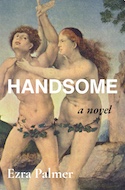
Taag & Rohg Press: Handsome by Ezra Palmer An indelible portrait of Alzheimer's. "A gorgeous, devastating exploration of what it means to love and care for someone in sickness and in health." --Kirkus Reviews
Learn More
Advertisement
Powered by: Xtenit