Banned Books Week
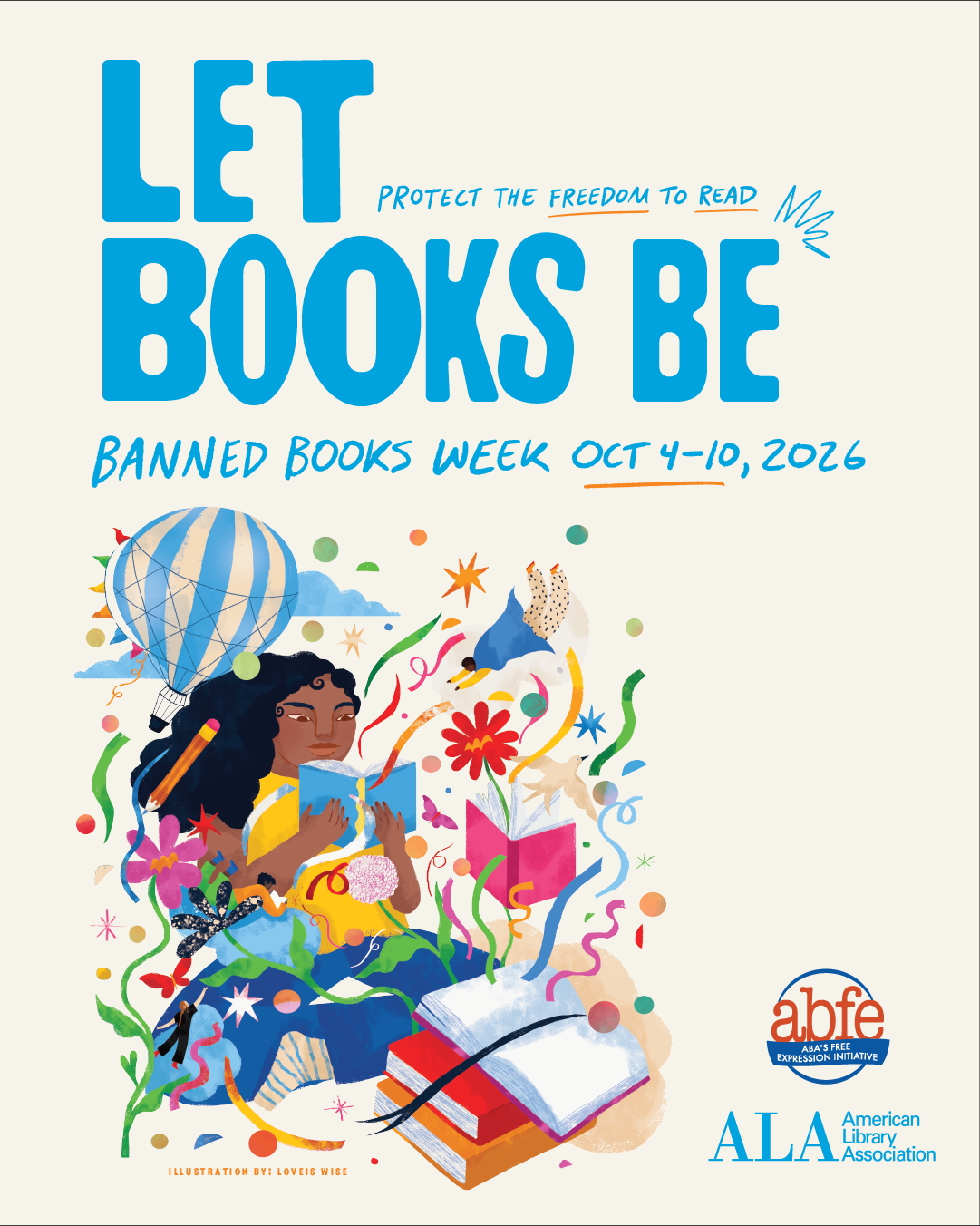
Welcome to another edition of Shelf Awareness Extra!, which are special issues that focus on a particular subject and appear once a month. The edition focuses on Banned Books Week, which takes place October 4-10.



WALKERBOOKSGROUPHOLIDAYHOUSE.0914.B1.BANNEDBOOKS.gif)
SOURCEBOOKS.0914.S1.BANNEDBOOKS.gif)
MACMILLANBLOOMSBURY.0914.SX.CINDERELLAISDEAD.jpg)
 The theme this year for Banned Books Week, which runs October 4-10 and is organized by the American Library Association, is "Let Books Be. Protect the Freedom to Read." Last year as the book world prepared for Banned Books Week, we commented that it felt like "the most crucial and necessary of all the Banned Books Weeks" since the event launched in 1982. Yet in 2026, fighting book bans and censorship feels even more crucial and necessary than last year as the full weight of administration's fight against diversity, ideas, science, history, free thinking, and free speech is being felt. Along with universities, media companies, law firms, organizations of all kinds, books are among the many targets, and more than ever book challenges and book bans are almost always instigated by groups affiliated or allied with the administrations; very few parents or others are behind censoring efforts.
Consider recent reports on the worsening situations in public libraries as well as in schools and school libraries:
"Out of Circulation: Expanding Censorship in Public Libraries," released earlier this month by PEN America, found that "public libraries nationwide are reaching a breaking point as a result of mounting pressures to censor collections, increased intimidation against library staff, and disruptions to library operations."
Over the last five years, the report continued, public libraries "have faced significant pressure to restrict access to information about race, sexuality, and gender as part of a larger movement that is chilling the freedom to read, learn, and think in public institutions through legislation and intimidation (previously dubbed the 'Ed Scare' by PEN America). This attack on knowledge, ideas, art, and books has never been just about books; it is a mechanism being used to influence who gets to be part of the American story--our collective sense of history, identity, and culture--and who is excluded from it...
"While some actions, like formally challenging books to demand their removal, were already common in libraries and have become more so, in recent years we have seen rising pressure to improperly reshelve books through prejudicial labeling ('aging up' or stigmatizing books with certain topics), as well as public campaigns against book displays or efforts to cancel events for overtly political reasons. Governance and funding of libraries, from the local to the national level, have also become tools to either compel ideological compliance or oppose the basic concept of a public library. Librarians are being threatened, harassed, and in some cases driven from their jobs--another source of censorship pressure."
PEN America's "Facts & Fiction: Stories Stripped Away by Book Bans," released this past spring, focused on censorship in schools and school libraries and found that censorship efforts in the past five years aim "to purge stories and books that discuss race and racism, LGBTQ+ people or characters, people or characters of color, and sex." Some 44% of banned titles feature characters or people of color, the largest percentage ever in this category, while 29% of the books are nonfiction, particularly informational books and text books. In the past year, PEN America also noted that "a strain of anti-intellectualism, as illustrated in bans on nonfiction titles, also mirrors the broader political attack on facts and knowledge and the skepticism and devaluation of, and disdain for, experts and expertise--tactics long associated with the rise of authoritarian regimes and intended to sow distrust in democratic institutions."
Organized by the ALA, Banned Books Week is supported by a coalition of organizations dedicated to free speech. These include the ABA's American Booksellers for Free Expression, the Freedom to Read Foundation, the Children's Book Council, the Little Free Library, the National Coalition Against Censorship, PEN America, the Comic Book Legal Defense Fund, the Authors Guild, the Association of University Presses, Penguin Random House, and others.
---
 Among the parts of Banned Books Week is Unite Against Book Bans, an ALA initiative begun in 2022 that "strives to stop the removal of reading materials from America's libraries and schools." The group has more than 200 partner organizations and tens of thousands of individual supporters. It offers a collection of book résumés to support frequently challenged books. The book résumés detail "each title's significance and educational value and are easy to share with administrators, book review committees, elected officials, and board members." It also provides all kinds of resources about free speech groups and programs.
---
 A key event during Banned Books Week is Let Freedom Read Day on Saturday, October 10, the last day of the Week. As organizers put it, "We're asking everyone to take at least one action to help defend books from censorship and to stand up for the library staff, educators, writers, publishers, and booksellers who make them available! Show us how you're taking action on social media by using the hashtags #LetFreedomReadDay and #BannedBooksWeek!"
The recommended actions include:
---
For the second year in a row, Libro.fm and Silent Book Club are partnering with independent bookstores and libraries for Read-Ins on varying days during Banned Books Week. The gatherings will feature silent reading sessions and activities protesting book bans, such as writing postcards to representatives, signing petitions, and preparing for school or library board meetings. Attendees will also receive a free audiobook, courtesy of Libro.fm.
In connection with Unite Against Book Bans, the Silent Book Club is offering four T-shirts for the "Banned Books World Tour 2026," featuring the books The Bluest Eye, 1984, The Great Gatsby, and Fahrenheit 451, each with the phrase, "I'm With the Banned." The Club will donate a portion of each sale to "fighting censorship, protecting intellectual freedom, and making books accessible to all."
MACMILLANCHILDRENS.0914.TX.BANNEDBOOKS.gif)
 The American Booksellers Association and its American Booksellers for Free Expression arm are supporting Banned Books Week in a variety of ways. As ABA CEO Allison Hill says, "In recent years, Banned Books Week has been less a reminder of the history of book bans in the U.S., and more about the current attacks on freedom of expression and the right to read. Hopefully this year Banned Books Week will be a call to action for readers to oppose unconstitutional legislation, stand up to book challenges in their communities, and vote for elected officials who protect the First Amendment. Indie booksellers continue to play a critical role in this fight, and ABA and ABFE are right there with them."
With help from Ingram, the ABA and ABFE are offering printable and digital assets for the Week, including a counter card, bookmarks, a poster, and a sticker that features a checklist (yes to "Sense," yes to "Sensibility," and no to "Censorship"). Click here for more information.
The ABA will again hold a Banned Books Week Social Media Display contest.
As part of the Right to Read coalition, representatives from ABFE will be in Washington, D.C., participating in a national day of action and lobbying on Thursday, September 24. The effort aims to raise awareness about three bills in the House and Senate that, if passed, would limit access to books by prohibiting the use of federal funds from public schools for teaching about a wide variety of topics and would ban certain ideas from being contained in library books. Other participants include national and local non-profit and grassroots organizations and for-profit organizations representing students, authors, parents, librarians, educators, and publishers.
The bills--HR 7661/S 4925, HR 2616, and HR 8705--seek to restrict the use of Elementary and Secondary Education (ESEA) funding, the largest source of federal funding to public schools. All the bills target "gender ideology" while the third also targets race. The bills could create a kind of banned list and lead to making many books financially riskier, especially children's books, by throttling a key market. It would also affect booksellers who work with schools, slowing or halting purchases by schools and book fairs.
Booksellers in in the capital area can join the coalition for the press conference and/or lobbying meetings. For those who wish to participate remotely in the Day of Action, the coalition will be distributing social graphics and messaging. For more information, click here.
---
 Many free speech groups are emphasizing the importance of elections and--especially this year--the midterms. The American Booksellers Association has again partnered with the League of Women Voters to help independent bookstores to get out the vote and "ensure that your community's needs are represented." The League is offering a Voters 2026 Midterm Election Toolkit as well as an online voter information tool, VOTE411.org/ABA.
And a reminder: tomorrow, September 15, is National Voter Registration Day.
---
Ingram and ABFE are offering a promotion on banned and challenged books. From now through October 10, the books will be discounted 2%. Also available: banned books-themed puzzles, caps, tarot cards, and more.
HARPERCHILDRENS.0914.TX.BUILDING903.gif)
The ALA's "Top 11 Most Challenged Books of 2025" consists of these titles. Because of ties, the list was longer than the usual 10.
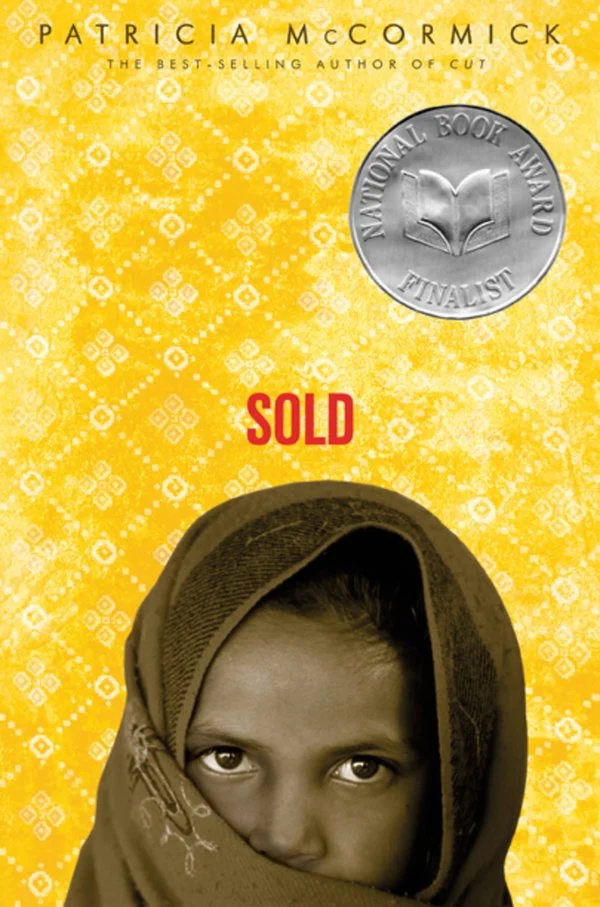 1. Sold by Patricia McCormick
2. The Perks of Being a Wallflower by Stephen Chbosky
3. Gender Queer: A Memoir by Maia Kobabe
4. Empire of Storms by Sarah J. Maas
5. (tie) Last Night at the Telegraph Club by Malinda Lo
5. (tie) Tricks by Ellen Hopkins
7. A Court of Thorns and Roses by Sarah J. Maas
8. (tie) A Clockwork Orange by Anthony Burgess
8. (tie) Identical by Ellen Hopkins
8. (tie) Looking for Alaska by John Green
8. (tie) Storm and Fury by Jennifer L. Armentrout
The ALA's Office for Intellectual Freedom tracked 4,235 unique titles challenged in 2025, the second highest ever documented by ALA. The highest ever documented was 4,240 in 2023. Of the unique titles challenged in 2025, 1,671 (40%) represent the lived experiences of LGBTQIA+ people and people of color.
Of book challenges in 2025, 92% were initiated by "pressure groups, government officials, and decision makers, up from 72% in 2024. Less than 3% of challenges originated from individual parents." As Sarah Lamdan, executive director of the Office for Intellectual Freedom, emphasized, almost all book challenges "were part of a well-funded, politically driven campaign to suppress the stories and lived experiences of LGBTQIA+ and BIPOC individuals and communities."
ALA defines a "ban" as the removal of materials from a library based on the objections of a person or group. A "challenge" is an attempt to have a library resource removed, or access to it restricted, based on the objections of a person or group. In 2025, ALA documented 5,668 books banned from libraries (66% of the total challenged). An additional 920 books were censored through access restrictions such as relocation or requiring parental permission. This is both the highest number of titles censored in one year and the highest rate of challenges resulting in censorship in the past 35 years, starting in 1990.